

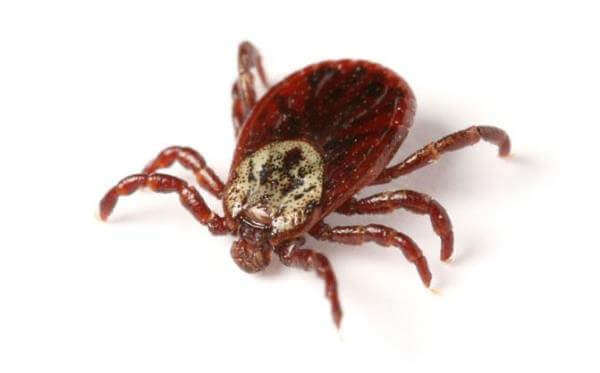
Health officials are urging people to protect themselves from tick bites as ticks are active from early spring through late fall.
A fatal case of ehrlichiosis in Floyd County, Indiana, has already been reported this month. The Floyd County Health Department and the Indiana Department of Health are working on the investigation. Indiana reported two ehrlichiosis deaths last year.
In addition to ehrlichiosis, people are at risk for several other potentially severe tick-borne diseases. While Lyme disease is the most common tick-borne disease, people are also at risk for a group of diseases that includes Rocky Mountain Spotted Fever. They are also at risk for alpha-gal syndrome, a condition caused by tick bites that can trigger an allergic reaction to red meat. The risk for tick-borne diseases is present in all parts of the state.
Preventing tick bites is the best way to prevent tick-borne diseases. People are encouraged to take the following precautions to prevent tick bites:
- Know where ticks are likely to be present (close to the ground in grassy, brushy, or wooded areas)
- Treat boots, clothing and outdoor gear with 0.5% permethrin (NOTE: permethrin should NOT be used on bare skin)
- Use EPA-registered insect repellents with active ingredients such as DEET, picaridin, IR3535, oil of lemon eucalyptus (OLE), para-menthane-diol (PMD) or 2-undecanone
- Treat your pets for ticks in consultation with a veterinarian
Once indoors, people should thoroughly check for ticks on clothing, gear, pets and skin. Tumbling clothes in the dryer on high heat for 30 minutes will kill ticks, and showering can help remove any unattached ticks. Attached ticks may be safely removed by using tweezers to grasp the tick close to the skin and then pulling outward with steady and even pressure. After the tick is removed, the area should be washed thoroughly. Ticks should never be crushed with the fingernails.
Anyone who becomes ill after finding an attached tick should see a healthcare provider immediately and alert the provider to the exposure. Most tick-borne diseases can be treated with antibiotics, and prompt diagnosis can help prevent complications. Testing ticks to see if they are carrying diseases is not generally recommended, as the information cannot reliably be used to predict whether disease transmission occurred.
 Knox County to host public meeting on solar projects
 Red Hill Unit #10 hires new principal and adopts new student technology policy
 Ameren announces proposed electric rate changes
 Early childhood education programs earn highest rating
 Illinois state sales tax reduction for school supplies to begin for parents
 Illinois State Police opens another kiosk to help with FOID and concealed carry applications
 Local man killed in a two vehicle accident
 Celebrate 217 Concert Week with $26 grandstand tickets
 New Office of Cybersecurity established in Indiana
 FRESH begins across Illinois
 Kratos completes $50 million state-of-the-art hypersonic systems payload integration facility in Indiana
 FSSA to text HIP members about HIP work requirements
 Lawrence County woman to be inducted into 4-H Hall of Fame
 Lawrenceville conducting walking and biking survey
 Strong storms batter Lawrence County