
Each year in the United States, thousands of babies die suddenly and unexpectedly. These deaths are called SUID (pronounced Soo-id), which stands for “Sudden Unexpected Infant Death.” SUID includes all unexpected deaths: those without a clear cause, such as SIDS, and those from a known cause, such as suffocation.
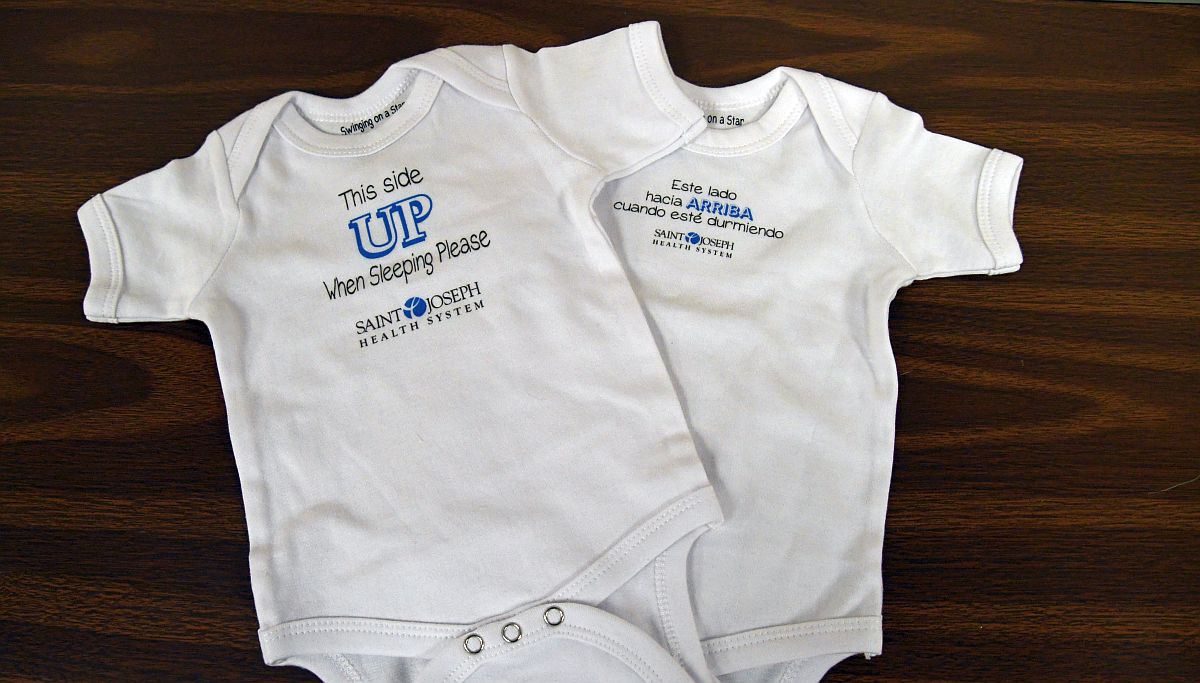
To create a safe sleep environment parents are encouraged to place their baby on his or her back to sleep, for naps and at night, to reduce the risk of SUID. In recognition of National Baby Sleep Day on March 1, Saint Joseph Community Health and Well-Being has purchased 300 “This Side Up” onesies using funds from a Safety PIN (Protecting Indiana’s Newborns) grant from the Indiana State Department of Health (ISDH). These onesies will be presented to mothers of newborns to encourage them to follow safe sleep practices.
Saint Joseph Health System (SJHS) Mishawaka Medical Center and Plymouth Medical Center are proud to be recognized by the National Safe Sleep Hospital Certification Program as a “Certified Safe Sleep Hospital,” for their commitment to best practices and education on infant safe sleep.
 Knox County to host public meeting on solar projects
 Red Hill Unit #10 hires new principal and adopts new student technology policy
 Ameren announces proposed electric rate changes
 Early childhood education programs earn highest rating
 Illinois state sales tax reduction for school supplies to begin for parents
 Illinois State Police opens another kiosk to help with FOID and concealed carry applications
 Local man killed in a two vehicle accident
 Celebrate 217 Concert Week with $26 grandstand tickets
 New Office of Cybersecurity established in Indiana
 FRESH begins across Illinois
 Kratos completes $50 million state-of-the-art hypersonic systems payload integration facility in Indiana
 FSSA to text HIP members about HIP work requirements
 Lawrence County woman to be inducted into 4-H Hall of Fame
 Lawrenceville conducting walking and biking survey
 Strong storms batter Lawrence County