

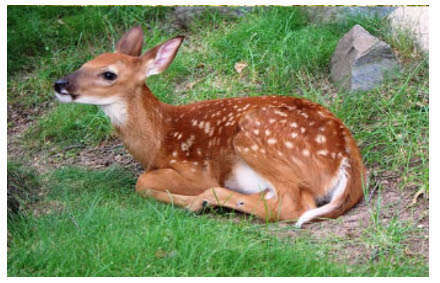
CWD is a fatal neurological disease in white-tailed deer.
As a result of Indiana’s positive detection of chronic wasting disease (CWD) in April, the Indiana Department of Natural Resources (DNR) has restricted moving deer from any CWD Positive Area for rehabilitation purposes.
CWD, described in detail at on.IN.gov/cwd, is a fatal neurological disease in white-tailed deer.
With the change, an individual who finds an orphaned, sick, or injured deer in a CWD Positive Area may only surrender the deer to a DNR-permitted wild animal rehabilitator that is located within a CWD Positive Area.
“This restriction is to help minimize the spread of CWD to new parts of the state, as fawns can carry this disease without appearing sick,” said DNR’s Deer Program lead Joe Caudell.
Currently, there is one CWD Positive Area in Indiana. It includes LaGrange, Steuben, Noble, and DeKalb counties. The state’s first positive case of CWD in white-tailed deer was confirmed by DNR in LaGrange County. While no deer have been documented in Steuben, Noble, or DeKalb counties, those counties are considered part of the CWD Positive Area because of their proximity to where the CWD-positive deer was found.
During their first few weeks of life, fawns often hide by themselves, motionless, to avoid predators while the mother seeks food.
“If you find a fawn alone, remember this, and help keep wildlife wild by letting it be, giving it space, and leaving the area,” Caudell said. “Its mother is likely nearby.”
If you encounter a deer that appears to be injured, consider letting the circle of life take its course, as difficult as this decision might be. If you plan to intervene with an injured or orphaned animal, learn about best practices at on.IN.gov/keepwildlifewild.
Before contacting a permitted wildlife rehabilitator for assistance, confirm that the deer is truly injured or orphaned. Look for obvious signs of injury, lethargy, constant vocalization, or an infestation of insects. Another reason for contacting a wildlife rehabilitator for assistance is having knowledge that the mother has been killed or hasn’t returned in several days (remembering that the mother may return only at night). A list of permitted rehabilitators is at on.IN.gov/wildliferehab.
If you see a deer that appears diseased, keep your distance and report it at on.IN.gov/sickwildlife. A DNR health biologist will review the case and determine if action is needed.
For best practices for the removal of dead wildlife, visit on.IN.gov/livingwithwildlife.
 USPS schedule for weekend into Columbus Day
 Equipment investments keep working for Indiana habitat
 Smith looks to punch ticket to Rockville Town Board seat
 Meth, ecstasy found on Clinton man during jail search
 Pair of motorcycle crashes keep Parke County Sheriff's deputies busy
 Parke Heritage Middle School awarded multi-million dollar Next Generation School Improvement Grant from IDOE
 BMV urges Hoosiers to complete voter registration by October 5 deadline
 Last day to ask your question for Indiana's next Secretary Of State
 Winchell named to lead Indiana DNR Division of Law Enforcement
 Ferguson Lumber earns dual 2026 industry honors
 Rep. Baird asks state, federal officials to explore harvest fuel relief for farmers
 Parke, Putnam and Vermillion counties now eligible for FEMA assistance
 Several fundraisers are planned to benefit the Montezuma family and fight back against Alzheimer's
 Postal Service recommends 2026 holiday mailing and shipping dates