


Today, U.S. Senators Todd Young (R-Ind.) and Chris Murphy (D-Conn.) reintroduced the Workforce Mobility Act, bipartisan legislation to limit the use of non-compete clauses that negatively impact American workers. U.S. Senators Tim Kaine (D-Va.) and Kevin Cramer (R-N.D.) co-sponsored the legislation.
About one in five American workers – 30 million people – are constrained by a non-compete clause, which blocks workers from working for a competing employer or starting a competing business. Research indicates that workers trapped by non-competes have lower wages, and their restricted mobility makes it more difficult for businesses to recruit talent. In states where non-competes are enforced, young firms are more likely to die in their first three years compared to states where they are not enforced
“Non-compete agreements stifle growth, career advancement, innovation, and human freedom. Our bill aims to remove these barriers and create opportunities that help, not hinder, Hoosier workers,” said Young. “The reforms in our legislation will assist workers and entrepreneurs so they can freely apply their talents where their skills are in greatest demand.”
“Millions of fast-food workers, security guards, janitors, and health care workers can’t leave their current job for a better one because they’re locked in non-competes. That crushes worker power, reduces wages, and stifles new businesses. The FTC should continue defending its rule to ban non-competes, but Congress should make the policy permanent and pass our legislation to protect workers and support entrepreneurs,” said Murphy.
“Non-compete agreements make it harder for businesses to recruit and hire talent and stifle wage growth for workers,” said Kaine. “I’m proud to join my colleagues in introducing this bipartisan legislation to promote innovation and support American workers.”
“Non-compete agreements stifle innovation and job mobility,” said Cramer. “I am glad North Dakota is a national leader in blocking these inhibitive practices. Our bipartisan bill makes non-competes virtually illegal and puts more power back into the hands of the American worker.”
The Workforce Mobility Act would:
- Narrow the use of non-compete agreements to include only necessary instances of a dissolution of a partnership or the sale of a business;
- Place the enforcement responsibility on the Federal Trade Commission and the Department of Labor;
- Require employers to make their employees aware of the limitation on non-competes, as studies have found that non-competes are often used even when they are illegal or unenforceable. The Department of Labor would also be given the authority to make the public aware of the limitation; and
- Require the Federal Trade Commission and the Department of Labor to submit a report to Congress on any enforcement actions taken.
A one-pager is available HERE.
 Legendary 'Indiana Rangers' receive Presidential Unit Citation, Sagamore of the Wabash for Vietnam War heroism
 Knox County man killed in motorcycle crash
 Lawrence County man sentenced to jail
 Illinois drivers encouraged to do business online
 Meta to pay up to $419M to Indiana, implement sweeping child-safety reforms on Instagram and Facebook
 Wabash River crests at Vincennes; still under flood warning
 Two new conditions now eligible for treatment with medical cannabis
 Gov. Mike Braun orders flags lowered to half-staff in honor of Dolly Parton
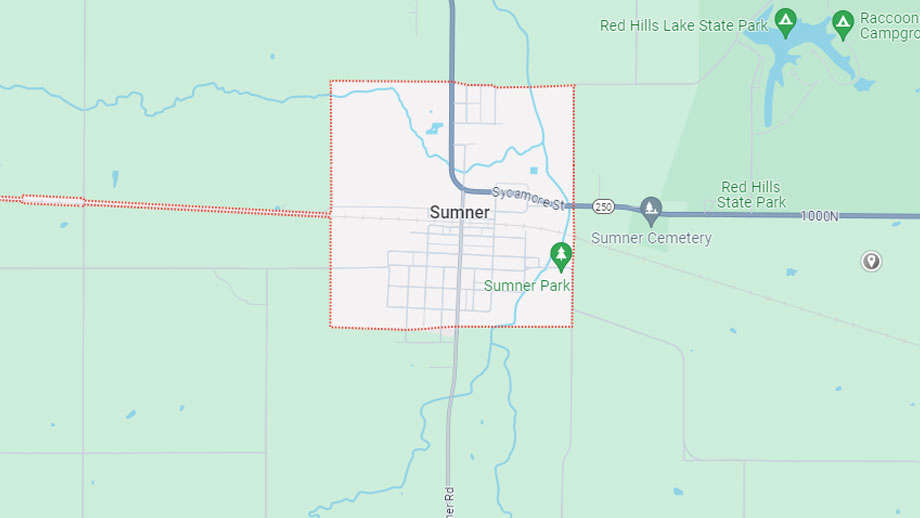 Sumner election petitions available
 New housing subdivision moving forward in Vincennes
 Parkside Elementary will open next week
 Restaurant at Red Hill State Park under new ownership
 Bridgeport Water boil order lifted
 Lawrence County Chamber recognizes Salyers; have begun executive director search
 Lawrence County Board hears about data centers and the county jail
 Parkside Elementary opening delayed again
 Knox County's Clayton Newton earns honors at the Indiana State Fair
 Indiana launches emergency program for veterans impacted by historical flooding
 Illinois State Police deploy new Bicycle Response Team