
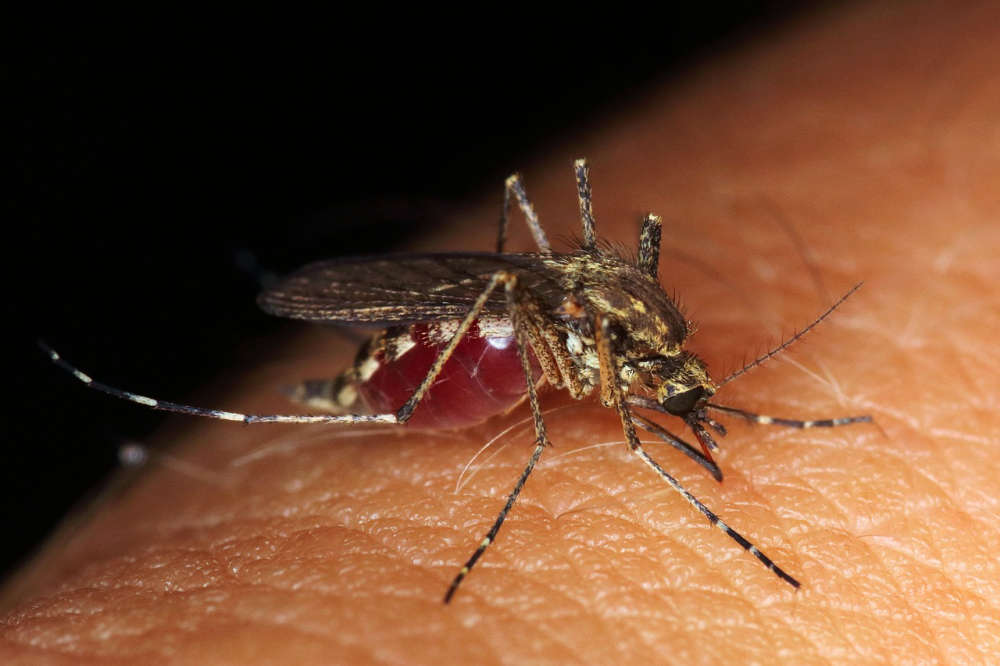
A mosquito sample collected in Vermillion County has tested positive for West Nile Virus.
No human cases of WNV disease have been detected this year. However, the Indiana Department of Health (IDOH) expects WNV activity to continue across the state during mosquito season, which continues through the first hard freeze.
“With warm temperatures already here, people are spending more time outside. Taking a few precautions to avoid mosquito bites can help ensure Hoosiers enjoy outdoor activities safely,” said State Health Commissioner Lindsay Weaver, M.D., FACEP.
Even a container as small as a bottle cap can become a mosquito breeding ground, so residents should take the following steps to eliminate potential breeding grounds:
• Discard old tires, tin cans, ceramic pots, or other containers that can hold water
• Each week, empty and scrub items that hold water such as birdbaths, toys, pools, and flowerpot saucers
• Repair failed septic systems
• Drill holes in the bottom of recycling containers left outdoors
• Keep grass cut short and shrubbery trimmed
• Clean clogged roof gutters, particularly if leaves tend to plug up the drains
• Frequently replace the water in pet bowls
• Aerate ornamental pools, or stock them with predatory fish
State health officials recommend the following personal protective measures:
• Avoid being outdoors when mosquitoes are active (especially during evening hours, from dusk to dawn, and in the early morning)
• Apply an EPA-registered insect repellent containing DEET, picaridin, IR3535, oil of lemon eucalyptus, or para-menthane-diol to clothes and exposed skin
• Cover exposed skin by wearing long sleeves and long pants in places where mosquitoes are especially active, such as wooded and shady areas
• Install or repair screens on windows and doors to keep mosquitoes out of the home
About 80 percent of people infected with WNV virus will not develop any symptoms. About 20 percent of people infected with WNV will develop an illness accompanied by fever, headache, body aches, joint pains, vomiting, diarrhea or rash. Less than 1 percent of people infected with WNV will develop severe illness affecting the nervous system, which can include inflammation in the brain or in the membranes that cover the brain and spinal cord. About 10 percent of severe WNV disease cases are fatal.
People older than 60 years and those receiving immunosuppressive medications or treatments are at greatest risk of severe WNV disease. People who think they may have West Nile virus should contact their healthcare provider. IDOH has developed a mosquito surveillance dashboard, which will allow Hoosiers to better understand their risk for mosquito-borne disease based on virus activity occurring throughout the state.
To view the dashboard and learn more about mosquito-borne disease, visit our website. For important health updates, visit the Indiana Department of health at www.health.in.gov or follow us on Twitter at @StateHealthIN and on Facebook at www.facebook.com/StateHealthIN/.
 LCMH Podiatry Clinic moves to new location
 LCHS to host program on local hermit
 Illinois to get additional federal healthcare funding
 Prep your vehicle for winter weather
 Expanded opportunities for incarcerated Hoosiers through 10-year Ivy Tech partnership
 Southwestern Indiana fatal accident victim identified
 Bridgeport to look at property ordinance revision
 Conservation officers remind hunters to prioritize safety during deer season
 Knox County caucus set to replace Streeter
 Unit 20 Board to replace football field turf
 Escaped Tennessee convict taken into custody
 Conviction appeal denied for Ray Tate
 Governor Braun extends gas tax savings
 Incumbent re-elected; newcomer elected in Lawrence County 2026 election
 Illinois State Police arrest two in Lawrence County
 One dead in southwestern Indiana crash
 Polls open statewide at 6 a.m. Tuesday
 Red Hill High School Band award winners at Spooktacular Parade