
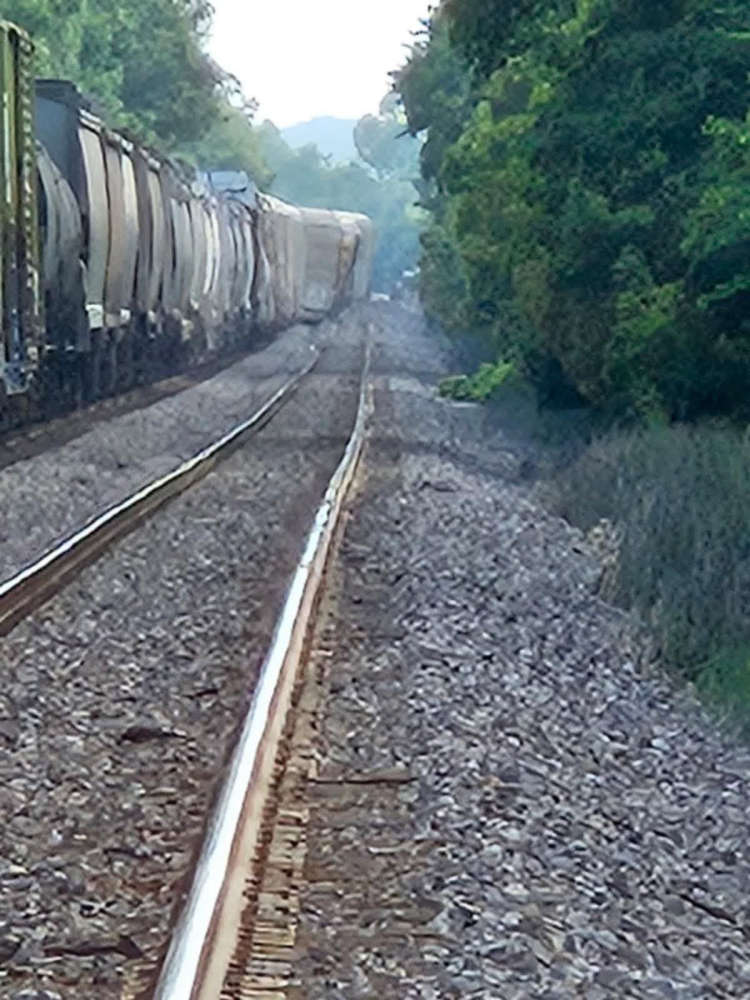
A preliminary report for the National Transportation Safety Board (NTSB) indicates that a bad "spring switch" may have caused the train derailment in neighboring Wabash County in July.
24 cars of a Norfolk Southern mixed freight train derailed while passing over the switch near the town of Browns. The derailed cars then collided with another stationary mixed freight train holding on a siding adjacent to the derailment site. Two tank cars containing molten sulfur ruptured and spilled onto the tracks and another tank car carrying denatured ethanol fuel also ruptured and spilled.
Two railroad crew members were injured on the stopped train. The locomotive engineer suffered a leg injury and was treated at a local hospital and an engineer trainee was hurt when molten sulfur splashed onto him. He was initially treated at the scene and was later transferred by air to an area burn trauma center.
The investigative report also is focusing on potential track maintenance issues. a date for release of the final report was not given.
 Lawrence County (ILL.) burn ban temporarily lifted
 City of St. Francisville cracking down on junk in yards and alleys and tall grass
 Two Lawrence County men in custody after burglary investigation
 Bridgeport Police make arrest in school threat incident
 City of Bridgeport continues bridge and infrastructure repairs
 Gov. Braun extends tax filing deadline for Hoosiers impacted by August storms
 Lawrence County issues burn ban
 Lawrence County Veterans Commission moving forward
 Governor Braun delivers another month of gas savings for Hoosier families
 Find a cooling center near you with Indiana 211
 LAFPD Trustee position open
 Statewide standards for E-bikes, E-motos and other electric devices protect riders, pedestrians and motorists
 Lawrenceville city election petitions now available
 Puntney named as new chairman of LCMH Board
 USDA offers disaster assistance to Ag producers in Indiana impacted by recent flooding
 Two Lawrence County 4-H members are project state champions
 Indiana man dies after weekend motorcycle accident; injuries reported in another in Lawrence County (Ill.)
 Lawrence County man sentenced on federal meth charges
 Heat Advisory in effect for southeastern Illinois