

This column will be written and categorized in the style and manner of a “Ripley’s Believe It or Not” entry.
It all started when I was corresponding with two Hoosier professors from Ball State University about an upcoming trip they were making to my university in order for our two institutions to develop an MOU (Memorandum of Understanding).
We are working on having some sort of mutual faculty and student exchange between our two institutions.
They were interested in not only touring our campus and visiting local places of interest in and around the university, but also to tour Fukuoka City and Kitakyushu City, the two main metropolises in the prefecture. I had some ideas already in mind of places and things I thought they would be interested in doing and seeing, but I decided to send them an internet article I came across that listed a variety of sites and activities we could possibly do during their visit.
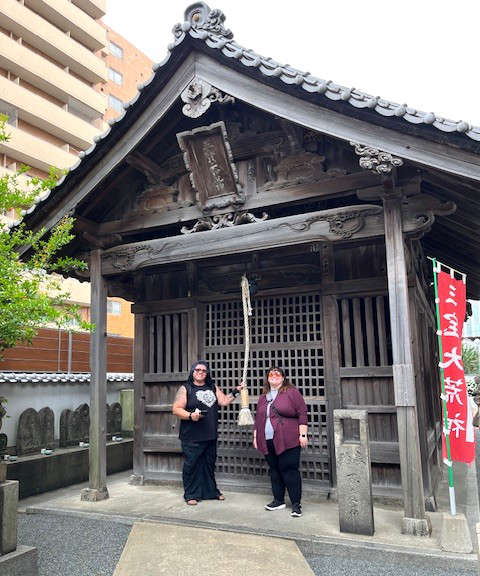
One of the professor’s eyes immediately went to a side article (that I had somehow missed) which highlighted a small Buddhist temple in the city center that featured “mermaid bones” as its main claim to fame. Well, needless to say, my interest was certainly piqued as I have lived in Fukuoka for 15 years and I had never heard of this temple, nor had I ever seen these mermaid bones that the article wrote about.
So, how on earth did this little Buddhist temple in central Fukuoka come to be in possession of these mermaid bones I wondered?

As the legend goes, it seems that a mermaid washed ashore here on Kyushu Island in Hakata Bay on April 14, 1222. Full disclosure here, I had to research the details for this column, and I found an interesting article by Swapna Krishna published in the online version for the “Smithsonian Magazine,” dated February 16, 2017.
According to the article, a shaman declared the discovered bones to be a good omen for the nation, so the bones were buried at Ukimido Temple, which prompted the locals to start referring to the temple as Ryūgū-jō Temple which “in Japanese folklore translates to the “undersea palace of the dragon god.”
This is the name the temple is still called today, so the nickname stuck like glue!
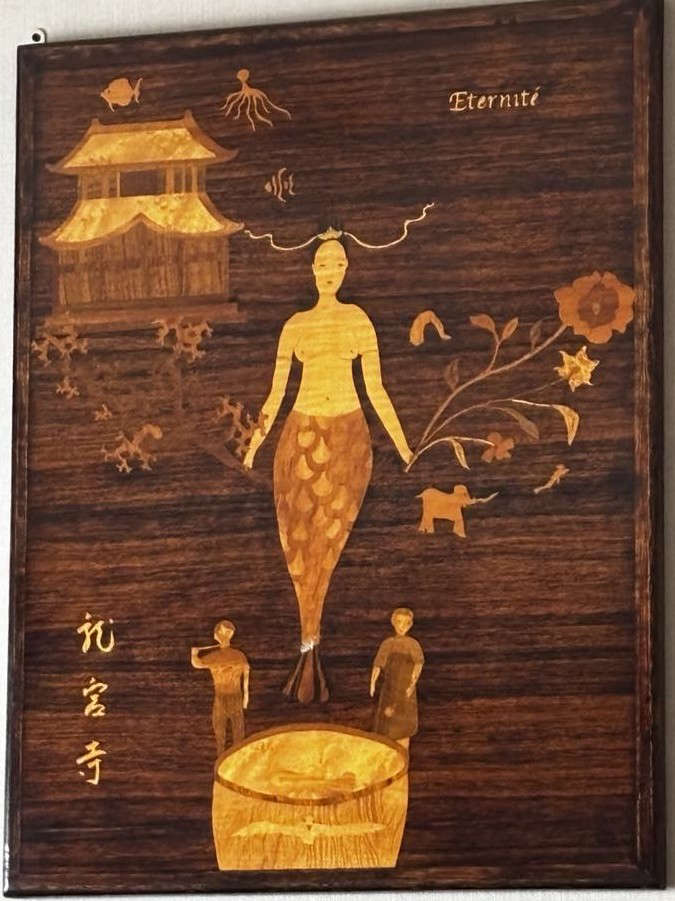
Most likely, what was perceived to be mermaids (ningyo in Japanese) by the local superstitious sailors and fishermen were actually “dugong,” or large warm water sea mammals that vaguely resemble and are likely related to manatees. This would make sense because the renditions of the mermaids displayed in the temple do resemble the body shape of a manatee much more than the beautiful and slender Disney depictions we tend to think of today when thinking about mermaids.
The dugong creatures actually travel in pairs or alone and are adept at staying underwater for up to six minutes without coming up for air.
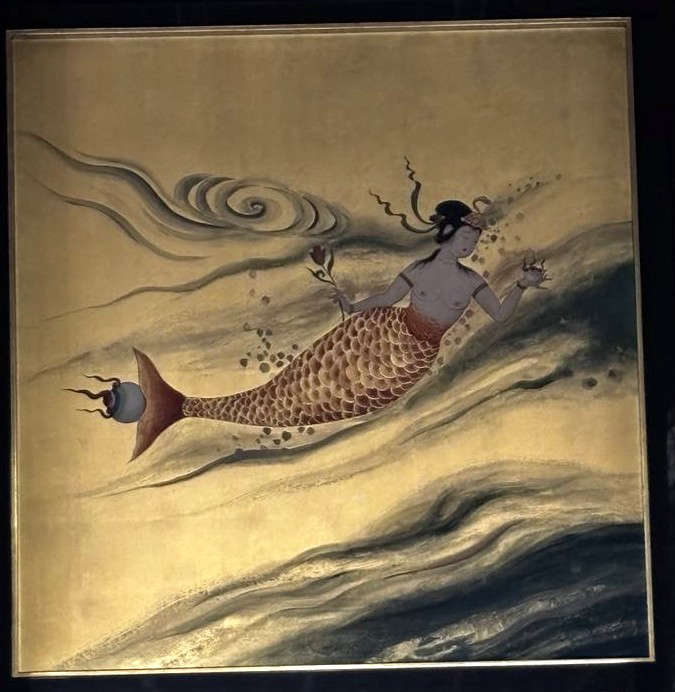
Another theory purports that perhaps the bones are of a finless porpoise (neophocaena phocaenoides) that may have washed ashore in 1222, and those who found them mistook them for being from a mermaid.
During the Edo Period, at some point, the bones were dug up and used as healing elixirs by the local people. They were soaked in water which people then used to bathe in thinking the bone-enriched water would keep them safe from disease and epidemics.
On our visit, a small notice at the temple explained that some bones were even ground into dust that people would injest thinking they had magical or healing powers.
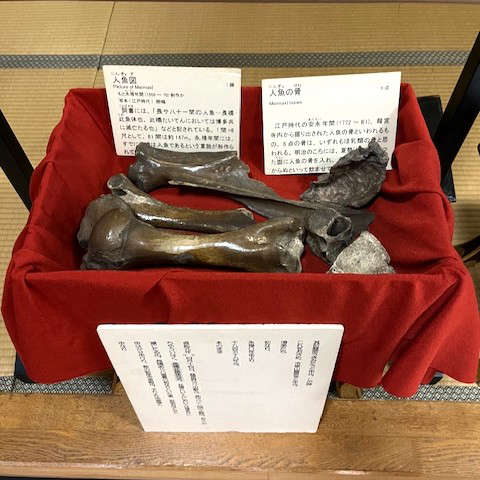
Sadly, today, only a few bones remain and certainly not an entire skeleton of anything vaguely resembling a mermaid. And I might add that this particular mermaid must have been “big boned,” as my mother would have said, because the bones on display are not dainty, slight, or fish-like in any way.
The mermaid bones are openly displayed in the sanctuary of the Buddhist Temple which is in a modern building next to the original temple, which is equipped with an elevator. The older portions of the temple are next to the building housing the bones.
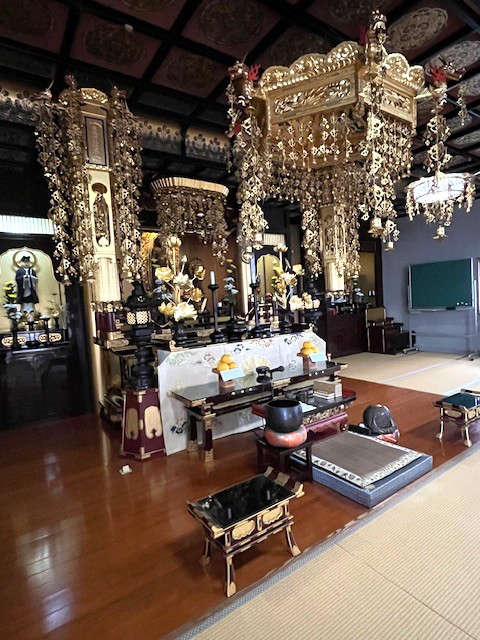
It is necessary, however, to make an appointment beforehand to see the bones in person. It is in a beautifully appointed and detailed room with ornate gold decorations and a lovely painted ceiling (photo), so after viewing the bones, it is nice to sit down and just take in all the splendor of the room.
So, thanks to my overseas’ visitors and their unusual request, I was able to experience something entirely new and out of the ordinary that I had no idea was even a possibility.
So, do or did mermaids exist?
Admittedly, I am not entirely convinced, but that is what makes a legend so interesting and intriguing. Besides, I have bragging rights at cocktail parties to say I have seen “mermaid” bones if it should ever come up in casual conversation!
 Callans seeks seat on Rockville Town Board
 Burkett eyes Vermillion County Council District 3 Seat
 IDHS warns against disaster assistance fraud
 Parke among the ten Indiana counties with reported measles cases
 Zamani seeks Vermillion County District 4 seat
 USDA announces record payments of $13.8 billion for 2025 crop year revenue and price safety net programs
 Nucor Corporation chooses additional expansion in Crawfordsville
 Applications open for Indiana's Advanced Nuclear Ready Communities Program
 USPS schedule for weekend into Columbus Day
 Equipment investments keep working for Indiana habitat
 Smith looks to punch ticket to Rockville Town Board seat
 Pair of motorcycle crashes keep Parke County Sheriff's deputies busy
 Parke Heritage Middle School awarded multi-million dollar Next Generation School Improvement Grant from IDOE
 BMV urges Hoosiers to complete voter registration by October 5 deadline
 Last day to ask your question for Indiana's next Secretary Of State