

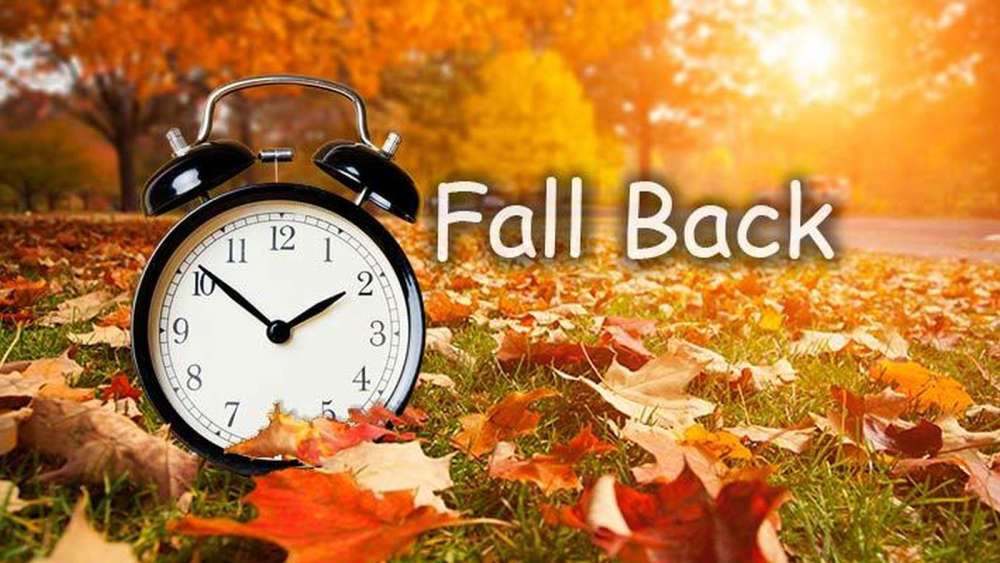
Daylight saving time is coming to an end for 2024 on Sunday, November 3rd, always the first Sunday in November.
Clocks will "fall back" one hour at 2 a.m. on November 3rd, granting most people an extra hour of sleep. With the change comes earlier sunrises and nightfall well before 7 p.m. It won't be until March 2025 that we adjust our clocks to "spring ahead" once again.
Frequent measures in Congress have tried to make daylight savings time permanent in order to ditch the practice of changing our clocks twice a year. However, the bills usually die before they ever come close to becoming law.
With little to no progress made on that recent legislation, Americans will continue to "fall back" in 2024 and "spring forward" next year.
 BMV urges Hoosiers to complete voter registration by October 5 deadline
 Gov. Braun extends gas tax suspension, releases dyed diesel for farms
 Last day to ask your question for Indiana's next Secretary Of State
 Winchell named to lead Indiana DNR Division of Law Enforcement
 Ferguson Lumber earns dual 2026 industry honors
 Rep. Baird asks state, federal officials to explore harvest fuel relief for farmers
 Parke, Putnam and Vermillion counties now eligible for FEMA assistance
 Several fundraisers are planned to benefit the Montezuma family and fight back against Alzheimer's
 Postal Service recommends 2026 holiday mailing and shipping dates
 Attorney General Todd Rokita calls on Hoosiers to claim compensation for inflated generic drug prices
 Pennsylvania Attorney General's Cold Case Section, Erie investigators announce arrest of Brazil, IN man in 2002 rape, murder
 Impaired driver taken to hospital then jail after crash
 Gov. Braun announces plan for new, larger campground at McCormick’s Creek State Park
 Governor Braun proclaims Indiana Rail Safety Week September 21-27
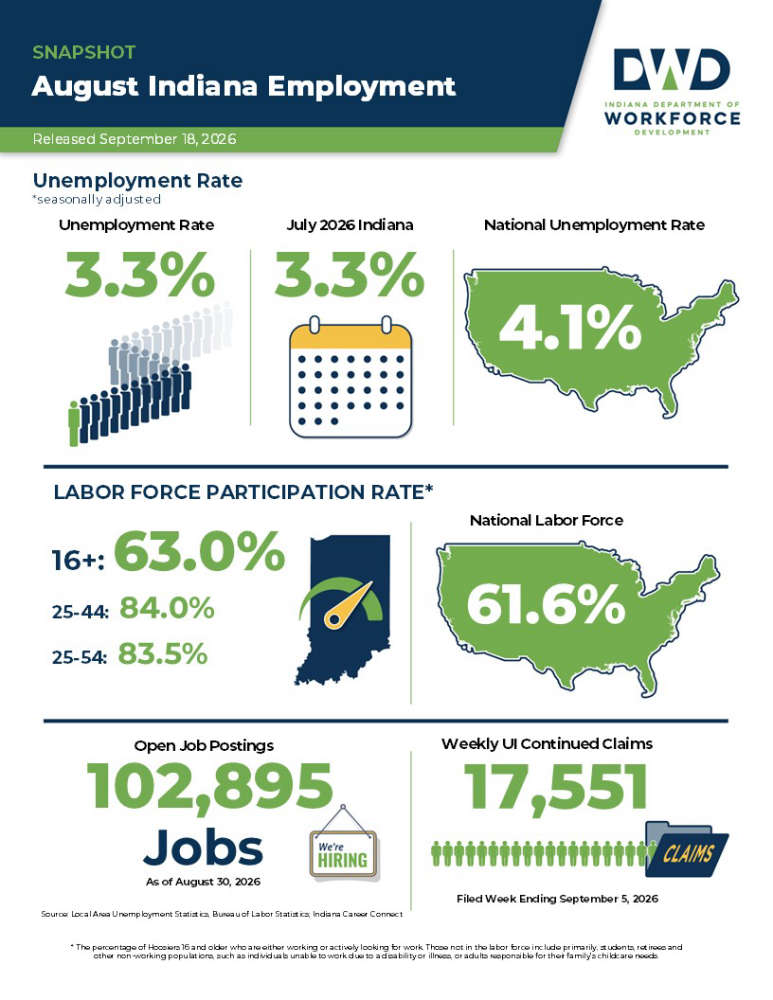 State unemployment rate remains below national average
 Indiana weekly gas price update