

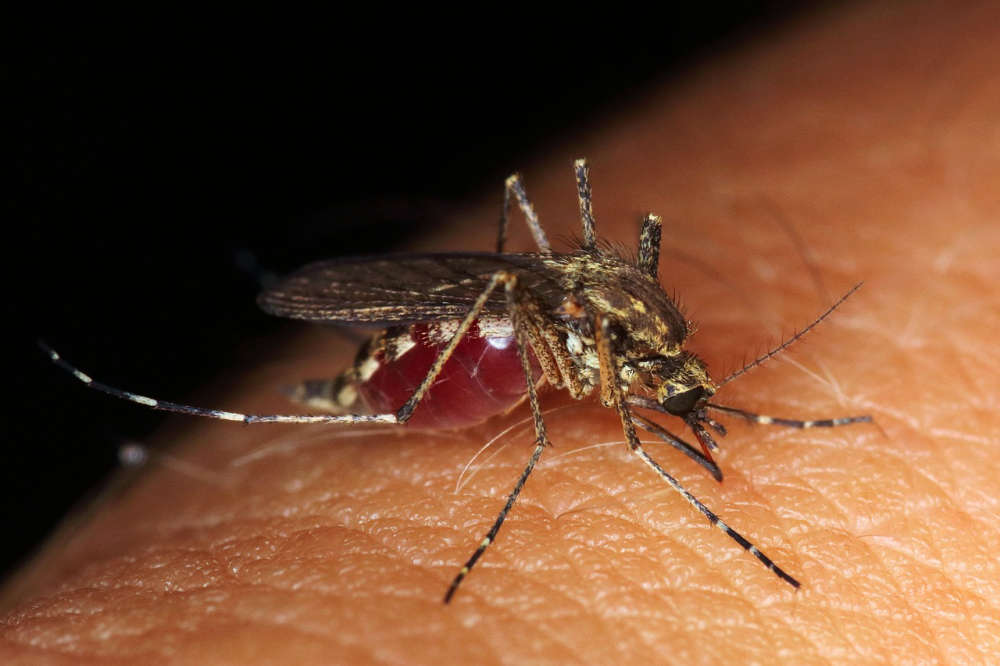
A mosquito sample collected in Vermillion County has tested positive for West Nile Virus.
No human cases of WNV disease have been detected this year. However, the Indiana Department of Health (IDOH) expects WNV activity to continue across the state during mosquito season, which continues through the first hard freeze.
“With warm temperatures already here, people are spending more time outside. Taking a few precautions to avoid mosquito bites can help ensure Hoosiers enjoy outdoor activities safely,” said State Health Commissioner Lindsay Weaver, M.D., FACEP.
Even a container as small as a bottle cap can become a mosquito breeding ground, so residents should take the following steps to eliminate potential breeding grounds:
• Discard old tires, tin cans, ceramic pots, or other containers that can hold water
• Each week, empty and scrub items that hold water such as birdbaths, toys, pools, and flowerpot saucers
• Repair failed septic systems
• Drill holes in the bottom of recycling containers left outdoors
• Keep grass cut short and shrubbery trimmed
• Clean clogged roof gutters, particularly if leaves tend to plug up the drains
• Frequently replace the water in pet bowls
• Aerate ornamental pools, or stock them with predatory fish
State health officials recommend the following personal protective measures:
• Avoid being outdoors when mosquitoes are active (especially during evening hours, from dusk to dawn, and in the early morning)
• Apply an EPA-registered insect repellent containing DEET, picaridin, IR3535, oil of lemon eucalyptus, or para-menthane-diol to clothes and exposed skin
• Cover exposed skin by wearing long sleeves and long pants in places where mosquitoes are especially active, such as wooded and shady areas
• Install or repair screens on windows and doors to keep mosquitoes out of the home
About 80 percent of people infected with WNV virus will not develop any symptoms. About 20 percent of people infected with WNV will develop an illness accompanied by fever, headache, body aches, joint pains, vomiting, diarrhea or rash. Less than 1 percent of people infected with WNV will develop severe illness affecting the nervous system, which can include inflammation in the brain or in the membranes that cover the brain and spinal cord. About 10 percent of severe WNV disease cases are fatal.
People older than 60 years and those receiving immunosuppressive medications or treatments are at greatest risk of severe WNV disease. People who think they may have West Nile virus should contact their healthcare provider. IDOH has developed a mosquito surveillance dashboard, which will allow Hoosiers to better understand their risk for mosquito-borne disease based on virus activity occurring throughout the state.
To view the dashboard and learn more about mosquito-borne disease, visit our website. For important health updates, visit the Indiana Department of health at www.health.in.gov or follow us on Twitter at @StateHealthIN and on Facebook at www.facebook.com/StateHealthIN/.
 Indiana State Police Internet Crimes Against Children (ICAC) Task Force reporting progress
 Thrive info session planned for March 26
 BMV warns of scam, more deceptive messages
 King looks to bring experience to Parke County Council
 Colorado man arrested on Indiana resident for child solicitation, other charge
 Zumwalt looks to carry Republican nod for Vermillion County Commissioner District 2
 Indiana Department of Veterans Affairs, American Legion Department of Indiana sign landmark agreement
 Brazil man arrested on rape, other charges
 Getting to know the Centerville Bulldogs
 GE Aerospace to make millions of dollars of investment in Terre Haute, Lafayette
 Phelps looks to claim Vermillion County Commissioner District 2 seat
 Rodney Atkins to perform at Putnam County Fairgrounds
 Smith looks to punch ticket to Rockville Town Board seat
 Safe Zones enforcement to resume on I-70 in Hancock Co., begin on I-65 in Jasper Co.
 IDHS focuses on raising awareness during Severe Weather Preparedness Week, March 8-14
 Parke Heritage to Martinsville, North Vermillion headed to Frankfort for boys regionals
 Martin looks to bring experience to Parke County Commissioner District 2 Seat
 Penny-rounding for retailers
 No intentional wrongdoing alleged in crash blamed for death of US Rep. Baird’s wife
 Hoover looks to turn Parke County Commissioner District 2 seat Blue