


Marshall County Auditor Angie Birchmeier explained in the third article of the series an overview of the relationship between the auditor and the commissioners.
The fourth article in this series will explore the relationship between the county auditor and the county treasurer.
The treasurer, like the auditor, is a constitutional officer and the powers of the office are established by the Indiana Constitution. The treasurer is responsible for collecting property taxes semi-annually as well as managing the cash balances of the county. The auditor is responsible for the funds ledger and is the official record of the finances of the county.
The auditor’s office calculates the property tax statements annually as well as applies deductions and adds drainage assessments. Once calculated, the information is uploaded to the State Department of Local Government Finance (DLGF) and the State Comptroller for their review.
After approval, any mowing/weed/sewer liens or additional fees that need to be added to specific property tax parcels are added and mailing addresses are updated. Upon completion of those processes, the information is then sent to the treasurer’s office to apply any advance payments then process for printing and mailing no later than April 15 of each year with the first installment due May 10 and the second installment due Nov. 10 by statute.
The treasurer collects all the property taxes due and payable for each installment, then works with the auditor’s office for semi-annual settlement. The property taxes collected are for all units of local government within Marshall County per the budget order issued by the DLGF annually based on the submitted budgets and maximum levy (maximum amount of property tax) that can be collected. Once the treasurer certifies the collection for the spring or fall accordingly, the information is passed back to the auditors’ office to process.
Prior to settlement, which occurs each June and December, the treasurer holds the funds on their cashbook until the money is receipted into the funds in the auditor’s ledger. Unlike the daily receipts that are receipted into the fund and the cash deposited, the property taxes are collected, deposited and accounted for on the treasurer’s cashbook until settlement. During the settlement process, there is a receipt for the entire amount collected during that installment, which is receipted into the settlement fund, then disbursed to the local units of government as well as to the county levy funds.
 Keystone Cooperative announces next CEO
 Indiana's county fairs allowed alcohol service areas starting July 1
 Kroger members can now redeem Points for dollars off groceries in-store and online
 First responders rescue multiple people in recent days
 Countrymark fueling stations hosting Fueling Freedom on Friday
 Step right up! Big Top Circus presented by Bee Window returns to the Indiana State Fair
 Congressman Baird ioins President Trump for Medal of Honor ceremony for Major Nicholas Dockery
 INDOT with chip seal operations on area roads
 Conservation officer serving Vermillion Co. completes advanced public safety diving instructor training
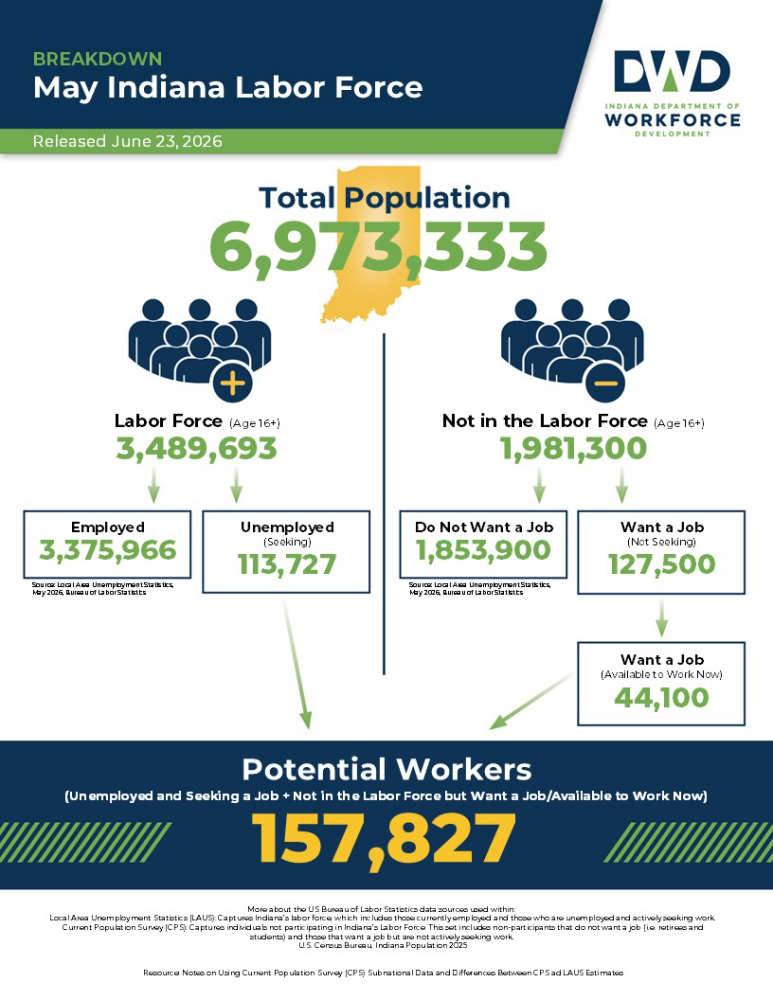 May unemployment rate in state still below national average
 IDEM recycling grants available
 Identity released in fatal U.S. 36 crash
 Longtime educator tabbed to lead new Montezuma Elementary
 Gov. Braun unveils Indiana’s exhibit for the National Mall during The Great American State Fair
 Nominations now open for farmers and ranchers to serve on USDA Farm Service Agency county committees
 CBP officers in Indianapolis seize counterfeit FIFA World Cup 2026 merchandise