

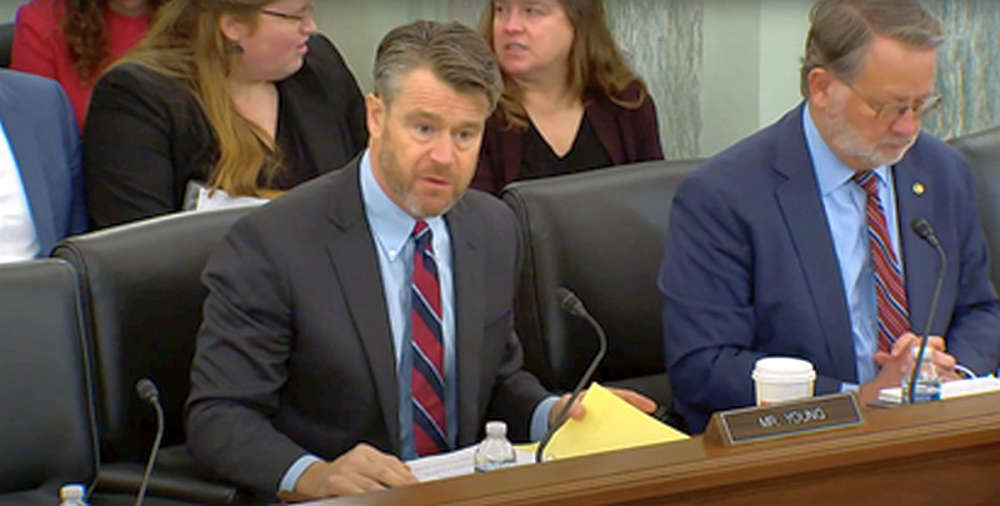
U.S. Senator Todd Young (R-Ind.), a member of the U.S. Senate Committee on Finance, and a group of Senate Republican colleagues sent a letter to U.S. Trade Representative (USTR) Jamieson Greer and U.S. Department of Commerce (DOC) Secretary Howard Lutnick. In the letter, they urged the Administration to launch a Section 301 investigation into unfair foreign pharmaceutical pricing practices and use it to pursue stronger commitments from trading partners that protect American patients and innovators.
In their letter, the senators wrote:
“We are concerned that Germany, Japan, and other high-income countries continue to maintain policies inconsistent with the Administration’s objective that U.S. trading partners pay their fair share for pharmaceutical innovation. USTR’s recent Special 301 report confirmed that these governments continue to use unfair policies to suppress pharmaceutical prices below fair market value and arbitrarily limit access to these lifesaving products. These policies limit export opportunities for U.S. companies, increase the burden on the United States to finance global drug development, and reduce the flow of investment into new treatments and cures.”
In addition to Senator Young, U.S. Senators Jim Banks (R-Ind.), John Boozman (R-Ark.), Katie Britt (R-Ala.), Shelley Moore Capito (R-W.Va.), John Cornyn (R-Texas), Kevin Cramer (R-N.D.), Chuck Grassley (R-Iowa), Jon Husted (R-Ohio), Tim Sheehy (R-Mont.), Tim Scott (R-S.C.), Cindy Hyde-Smith (R-Miss.), John Curtis (R-Utah), Ted Budd (R-N.C.), Thom Tillis (R-N.C.), Steve Daines (R-Mont.), Roger Marshall (R-Kan.), Roger Wicker (R-Miss.), Bill Cassidy (R-La.), Lindsey Graham (R-S.C.), Marsha Blackburn (R-Tenn.), Dave McCormick (R-Pa.), and Cynthia Lummis (R-Wyo.) joined the letter.
Full text of the letter may be found here and below.
Dear Secretary Lutnick and Ambassador Greer,
We welcome the United States-United Kingdom Arrangement on Pharmaceutical Pricing as an important step toward addressing foreign price controls that force Americans to subsidize pharmaceutical innovation for the rest of the world. We write to encourage the Trump Administration to pursue similar agreements with other countries that use non-market distorting policies to unfairly shift the costs of drug development onto the United States.
We are concerned that Germany, Japan, and other high-income countries continue to maintain policies inconsistent with the Administration’s objective that U.S. trading partners pay their fair share for pharmaceutical innovation. USTR’s recent Special 301 report confirmed that these governments continue to use unfair policies to suppress pharmaceutical prices below fair market value and arbitrarily limit access to these lifesaving products. These policies limit export opportunities for U.S. companies, increase the burden on the United States to finance global drug development, and reduce the flow of investment into new treatments and cures.
Rather than moving toward fairer market access and pricing practices, some foreign governments are brazenly expanding them to further reduce their contributions to innovation. For example, even though Germany already spends far less than the United States on innovative medicines, the German government recently announced significant additional cuts to drug prices and reimbursement These plans were announced just weeks after USTR publicly identified Germany’s suppression of pharmaceutical prices as an unfair trade barrier in USTR’s 2026 National Trade Estimate Report.
The United States should act quickly to send a strong signal that foreign policies undervaluing U.S. innovation and investment will be met with a serious and sustained trade response, particularly before Germany and Japan vote to further unfair drug prices and other countries follow suit if they see no repercussions from the U.S. government. Therefore, we urge the Administration to initiate a Section 301 investigation into foreign pharmaceutical pricing practices as soon as possible.
A formal Section 301 investigation would provide an important mechanism to examine these policies, establish negotiating leverage, and pursue binding commitments to restore fairness for American taxpayers and patients. We appreciate your continued attention to this issue and stand ready to support a coordinated strategy that ensures our trading partners contribute appropriately to the cost of medical innovation.
Sincerely,
 Indiana state forests to offer open houses
 Lawrence County (ILL.) burn ban temporarily lifted
 City of St. Francisville cracking down on junk in yards and alleys and tall grass
 Two Lawrence County men in custody after burglary investigation
 Bridgeport Police make arrest in school threat incident
 City of Bridgeport continues bridge and infrastructure repairs
 Gov. Braun extends tax filing deadline for Hoosiers impacted by August storms
 Lawrence County issues burn ban
 Lawrence County Veterans Commission moving forward
 Governor Braun delivers another month of gas savings for Hoosier families
 Find a cooling center near you with Indiana 211
 LAFPD Trustee position open
 Statewide standards for E-bikes, E-motos and other electric devices protect riders, pedestrians and motorists
 Lawrenceville city election petitions now available
 Puntney named as new chairman of LCMH Board
 USDA offers disaster assistance to Ag producers in Indiana impacted by recent flooding
 Two Lawrence County 4-H members are project state champions
 Indiana man dies after weekend motorcycle accident; injuries reported in another in Lawrence County (Ill.)
 Lawrence County man sentenced on federal meth charges