
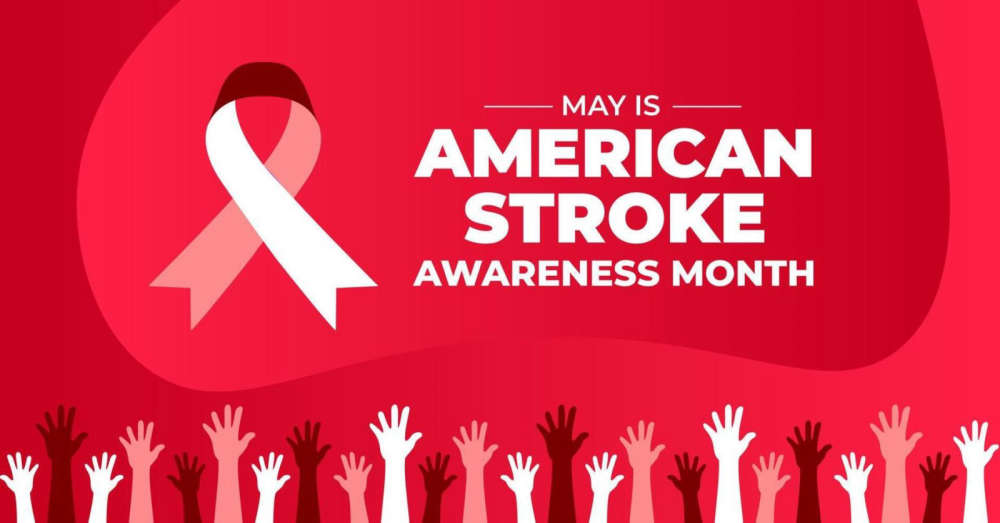
Every year, approximately 800,000 people in the U.S. have a stroke, however, as many as 80% may be preventable with healthy lifestyle changes and screening for risk factors. During May, American Stroke Month, the American Stroke Association, a division of the American Heart Association, is raising awareness nationwide that stroke is largely preventable, treatable, and beatable.
A stroke can happen to anyone, even young people. Know the stroke signs, risk factors, and how to protect yourself:
- Spot a stroke F.A.S.T. If you see Face drooping, Arm weakness or Speech difficulty, it’s Time to call 911. Explore what the warning signs may look, feel, or sound like in the interactive F.A.S.T. Experience.
- Understand your risk factors and ask a doctor how to prevent a stroke. High blood pressure is a leading cause and controllable risk factor for stroke.
- Stroke recovery is within reach. Track your health, medication, and more with the Heart & Stroke HelperTM app for stroke survivors and caregivers.
A stroke occurs when normal blood flow to the brain is interrupted. When parts of the brain do not receive the oxygen-rich blood they require, those cells die. Rapid identification and treatment of a stroke enhance the chances of survival and recovery.
Stroke is an emergency. If someone is having a stroke, they must get medical attention right away.
Use the acronym F.A.S.T. to identify the most common signs of stroke:
- Face Drooping - Does one side of the face droop or is it numb? Ask the person to smile. Is the person's smile uneven?
- Arm Weakness - Is one arm weak or numb? Ask the person to raise both arms. Does one arm drift downward?
- Speech Difficulty - Is speech slurred or hard to understand? Ask the person to repeat a simple sentence, like "The sky is blue."
- Time to Call 911 - If you notice any of these symptoms, even if they go away, call 911 and get to a hospital immediately. Quick action can save a life.
Black and Hispanic adults in the U.S. face disproportionately higher stroke risk, driven in part by higher rates of high blood pressure, obesity and diabetes[3], as well as socioeconomic factors that impact access to care and prevention[4].
A large majority of strokes can be prevented:
- Manage your blood pressure – Lowering your blood pressure reduces your risk of stroke. According to the 2025 American Heart Association Statistical Update, nearly half of adults in the U.S. have high blood pressure, and many don’t even know it.
- Live a healthy lifestyle – Eating well, staying active, quitting smoking and managing stress can all help lower your stroke risk[5]. The Association’s Life’s Essential 8 provides key steps for improving and maintaining cardiovascular and brain health.
- Monitor health conditions – Conditions like atrial fibrillation (AFib), diabetes and high cholesterol increase stroke risk. Work with your health care provider to manage them.
- Reduce risk for a second stroke - Nearly 1 in 4 survivors will have another stroke[6], in some instances because they don’t know what caused the first stroke. Testing to identify cause and additional risk factors can help you and your health care team develop a plan to prevent another one.
Those who have had a stroke often must work against physical, emotional and cognitive changes to move forward. Stroke survivors and caregivers can track their health journey, medications and receive trusted information about stroke with the Heart & Stroke Helper app.
This American Stroke Month, take action and inspire change by learning the signs of a stroke and talking to your health care team to manage your risk factors.
Together, we can change the future of health and transform lives. Learn more at Stroke.org/StrokeMonth.
The HCA Healthcare Foundation is a national sponsor of the American Stroke Association’s Together to End Stroke® initiative and American Stroke Month.
 Red Hill Unit #10 adopts fiscal year budget;sets high school graduation
 Lawrenceville to seek state sidewalk improvement grant
 Early voting for November election underway in Illinois
 Vincennes fire victim identified
 Postal Service recommends 2026 holiday mailing and shipping dates
 Lawrence County high schools recognized for student financial aid services
 Mock emergency drill planned in Lawrence County
 Unit #20 fiscally sound after passage of 2026-27 budget
 Illinois to close eight state visitor information centers
 Niemerg issues statement on no cash bail anniversary
 Lawrence County drivers reminded of Child Passenger Safety Week
 Fire injures one person in Vincennes
 Farm harvest safety reminders for drivers
 Southwestern Indiana fugitive arrested in Illinois after multi-county chase
 Governor Braun proclaims Indiana Rail Safety Week September 21-27
 Lawrence County (ILL.) man charged with child sex crime
 LCMH promotes Diesser to Lead Cardiopulmonary Nurse