


Today’s column keeps us close to my home.
The city where I live is roughly equal distance between Fukuoka City and Kitakyushu City, the second largest city in the prefecture. It is the gateway city from the main island of Honshu to the island of Kyushu. Kitakyushu has always been an important port for international commerce from early times.
The city itself is now comprised of five smaller cities that when combined form the metropolis of Kitakyushu (just under one million inhabitants). Those cities are Kokura (which is what the area around Kitakyushu station is called today), Moji, Yahata, Tobata, and Wakamatsu.
In 1963 all of these cities merged to become Kitakyushu.

During the Meiji Period (1868-1912), the strategic advantages the area held for all of Japan was duly recognized by the government, and a rapid push to build ports and railroads took place, which in turn, built up its infrastructure that encouraged rapid industrial development.
The Moji area (the subject of a past column of “Letters Home”) is especially unique because of the preservation efforts made in modern times to maintain the old-world charm it has with its many Meiji Era buildings and structures.
Japan is a world leader in the innovation of the common commode, so there is no more famous producer of toilets and other bathroom fixtures than TOTO, a Kitakyushu-based company. On the company’s 100th anniversary, it opened up a museum exalting the virtues and evolution of the toilet and how it has changed since its invention.
Visitors can peruse a huge showroom on the first floor of its headquarters and then continue to a well-maintained museum on the second floor. The museum focuses on the company’s history, showcasing ceramic toilets from 1914 and how it became a pioneer in the commode industry.
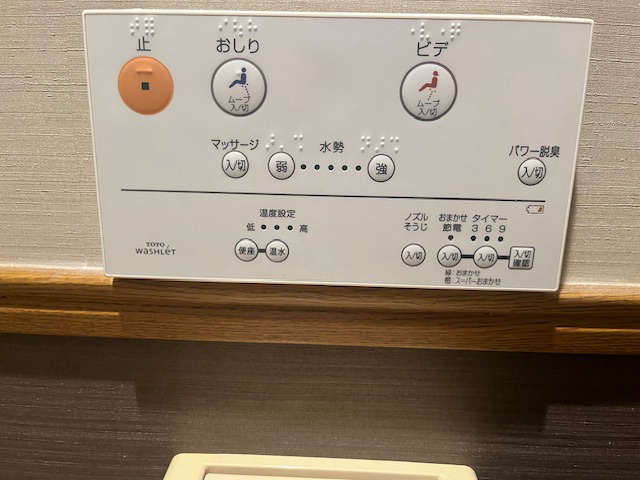
Today, TOTO is best known for its “washlets” (bidet function) toilets that are now largely standard in Japan, even in public toilets. The washlet function allows users to wash (and in some models, even dry) their derrieres after one’s daily evacuation. Some come equipped with a sound machine that will mask any sounds that might be emitted during this daily ritual.
The sound effect addition was added when it was realized that women were flushing the toilet while in public in rapid succession in order to mask the sound of their tinkling. The amount of water being used was a huge waste, so the company added the sound masking button as a way to conserve water and to give women peace of mind to tinkle stress-free, without worry of other people being able to hear them.
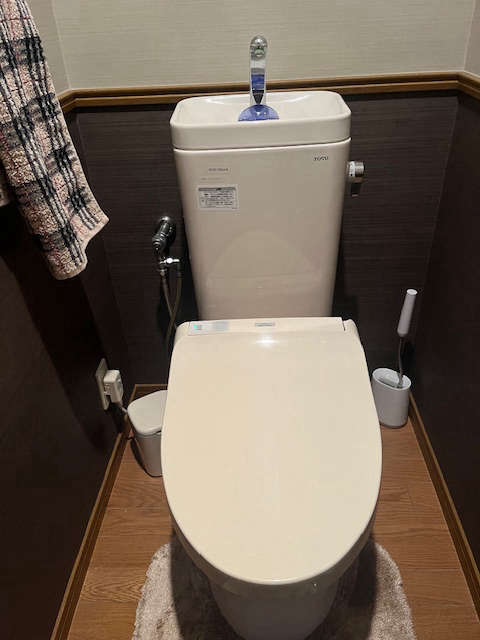
The inventor, Kazuchika Okura, had traveled to Europe and was very impressed with the gleaming white ceramic toilets and decided that Japanese bathrooms needed an upgrade from the traditional outdoor squat toilets with no sewage systems. He founded the company “Toyo Toki” in 1917 and the company changed its name to TOTO in 1970.
I especially appreciate the heated toilet seat function on a cold morning. TOTO is constantly innovating the basic concepts and designs of their toilets offering customers more and more luxury-based add-ons for this daily human necessity. (see photos)
Kokura Castle is charming and lovely and very easy to access from Kokura Station. Dating back to the early 1600s, during the Edo Period, the castle burned down in 1837, with parts being rebuilt in 1839. It was intentionally burned down in 1866 by retreating Kokura troops.
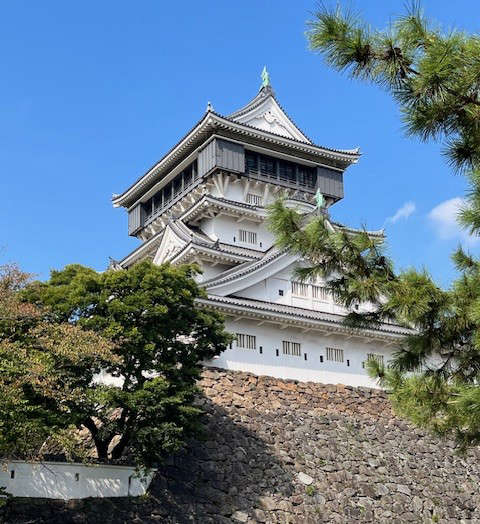
The main castle keep was then rebuilt in 1959 and completely restored by 1990 (photos). On the castle grounds (called Katsuyama Park) is a lovely Shinto shrine complex that is very popular during the New Year when visitors perform their first shrine visit of the year (hatsumode).
Around the castle are lovely gardens and ponds, as well as a well-maintained moat with an exit near the Riverwalk area that has ample restaurants and stores for shopping. The castle itself consists of five floors, with the top floor offering gorgeous panoramic views of the city. Today, the castle serves as a museum displaying historical artifacts and interactive displays.
Another seasonal activity in Kitakyushu is to attend the annual Kawachi Wisteria Garden Festival located in the hills outside of Kitakyushu. The best time to go is in late April and early May.
I was not prepared for the visually stunning explosion of wisteria trees and vines on my first visit. It was absolutely spectacular and the scope of it was something I had never expected or witnessed before. This private garden is open to the public, and it has 100-meter-long tunnels with varying types of wisteria, allowing visitors to stroll underneath the huge canopies of flowers.
Kitakyushu offers foodies a lot of variety in cuisine and drinks. Due to its proximity to the sea, sushi is a well-known delicacy of the area, as well as fugu (blowfish). Kitakyushu curry and gyoza are delicacies from the region, too.
Japan’s fabled wagyu beef industry has a delectable version in Kitakyushu that is delicious and succulent. There are nearly too many izakayas (local traditional restaurants and pubs) to count, offering many delicious options, most utilizing locally sourced ingredients for the hearty dishes often served on small plates.
Like most regions of Japan, local sake is plentiful and quite tasty to wash all the food down. There is definitely something for everyone’s discerning tastes.
People travelling by Shinkansen (bullet train) can get off at Kokura from Kyoto or Tokyo to explore the city for several hours and then take a rapid express train (or bullet train) on to Fukuoka City. An hour north by bullet train on Honshu from Kokura is Hiroshima, and then south of Kitakyushu, people can visit Beppu in Oita, Nagasaki, Kagoshima, Miyazaki, and/or Kumamoto.
Kitakyushu is a good starting point to visit just about anywhere on Kyushu Island.
Todd Jay Leonard, Professor Emeritus at the University of Teacher Education Fukuoka, has lived in Japan for over 35 years. He is the author of 28 books and has written columns on his life in Japan for various Shelbyville media outlets for more than 20 years. He can be reached at toddjayleonard@yahoo.com.
 Board of Works approves three SCUFFY roadblock locations
 Shelbyville Latin, Mythology students shine at Latin Convention
 Parke Heritage brings end to Triton Central's record-breaking season
 Medical incident may have caused crash, Greensburg man's death
 Body of a man found in Big Blue River
 I-70 stopped Sunday in Hancock County
 Pleasant View Road bridge over I-74 to close for bridge replacement in Shelby County