

The First Amendment does not prevent states from requiring online purveyors of pornography to implement reasonable age-verification measures to protect children from harm.
As co-leader of a 24-state coalition, Attorney General Todd Rokita pressed this point in an amicus brief filed with the U.S. Supreme Court recently.
The court is considering a constitutional challenge to a Texas law requiring websites hosting large amounts of obscene material harmful to children to implement a reasonable age-verification system. That law is similar to an Indiana law passed by the General Assembly. It reflects that states have long had the authority to prevent minors from accessing obscene materials, including pornography.
“Not only do states have the authority to prevent pornography websites from providing children with hardcore porn, but they have a responsibility to do so,” Attorney General Rokita said. “The truth is that exposure to porn — much of which touts sexual violence — causes real harm to minors. It hurts them emotionally, intellectually, psychologically, sexually and socially. So, there are compelling reasons to prevent minors from viewing pornography. Children are a precious gift from God. As a public servant, I’ll always support parents in the mission to protect our kids.”
Many other adult industries — such as alcohol, gambling and tobacco — already employ age-verification technology.
 Healthy Shelby County opens The CommunityLink, bringing Shelby County nonprofits under one roof
 POET, DTE Vantage working to build carbon capture and sequestration facility in Shelby County
 Governor Braun proclaims Indiana Rail Safety Week September 21-27
 Central Indiana housing inventory continues to grow as home prices hold steady
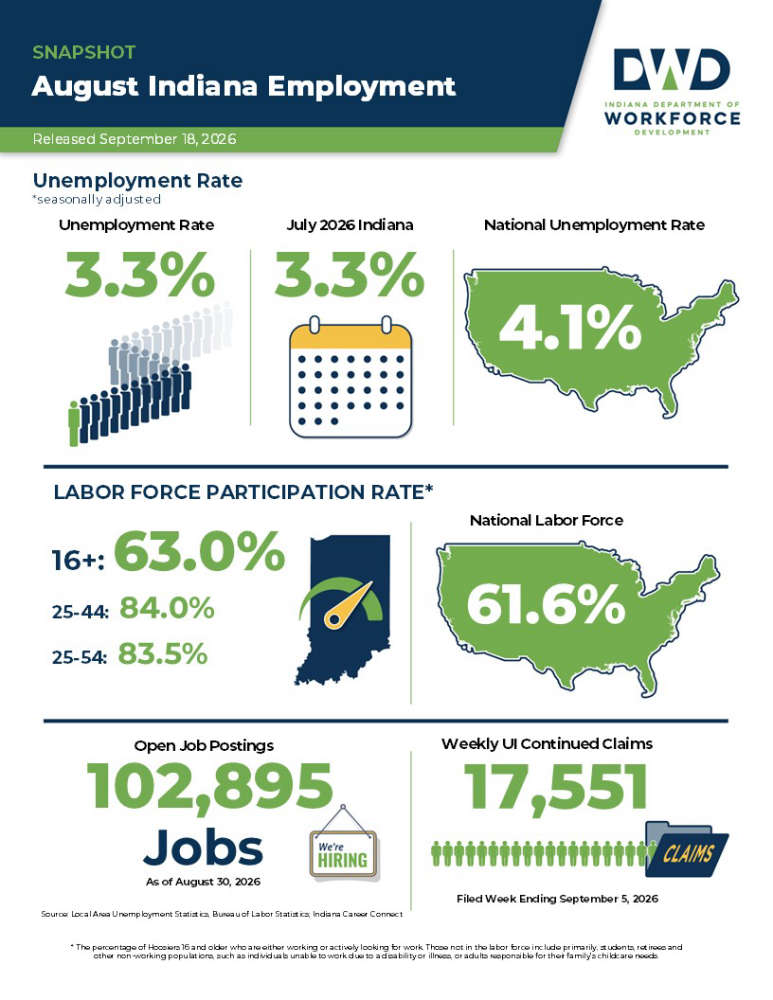 State unemployment rate remains below national average
 Indiana weekly gas price update
 McCordsville woman sentenced as part of nationwide fraud enforcement
 Decatur County among FSA offices hiring program analyst