

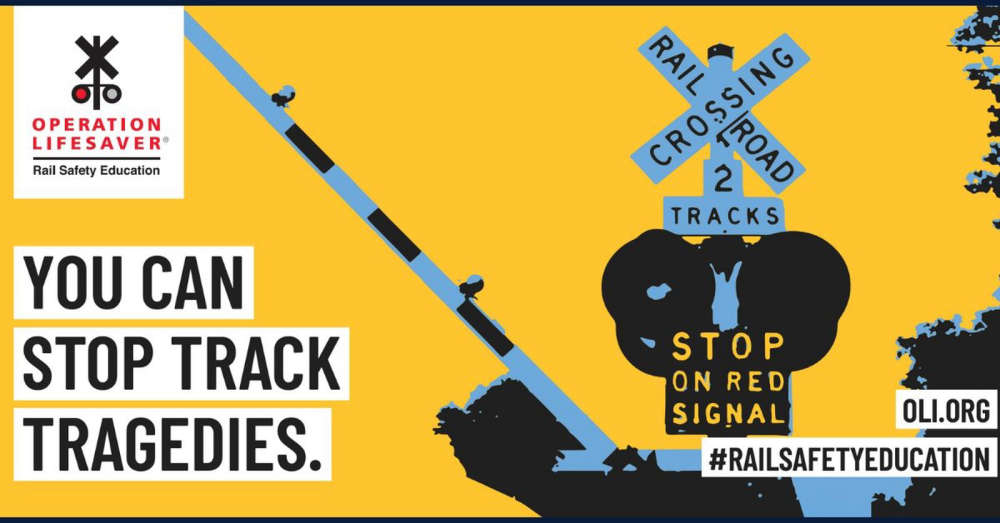
Every year, 2,100 North Americans are killed or seriously injured when they engage in unsafe behavior around tracks and trains. Indiana Operation Lifesaver is joining Operation Lifesaver Inc. (OLI) and State Operation Lifesaver Programs nationwide during Sept. 23-29 to observe Rail Safety Week, urging the public to help #STOPTrackTragedies. Operation Lifesaver Canada and the Mexican Association of Railroads (AMF) are simultaneously observing Rail Safety Week in Canada and Mexico, partnering in the U.S. mission to raise awareness, educate, and save lives.
In Indiana, each year, approximately 100 people are killed or injured in grade crossing and trespassing incidents.
Said Indiana Operation Lifesaver Executive Director Jessica Feder, “Indiana Rail Safety Week activities in Indiana will emphasize community education events along with social media activity sharing the lifesaving rail safety education message.” “We are kicking off the week today with a state Indiana Rail Safety Week proclamation. Through rail safety education this week and daily, we empower Indiana residents to make safe choices around railroad tracks and trains and help keep their communities safe.”
During Indiana Rail Safety Week, new social media graphics, videos, and public service announcements (PSAs) will be released. Two new videos will be launched as part of the ongoing #STOPTrackTragedies campaign, featuring personal stories of people directly affected by rail crossing or trespassing incidents — including victims, friends and family members, locomotive engineers, and first responders.
 Rush Co. Sheriff's Department asks for public's help to find Nathaniel Miller
 New class of Leadership Shelby County
 SCP to present Noises Off
 City of Shelbyville receives federal funding for dual utility study
 BRCF puts GIFT IX funding into action to address community health priorities
 United Way of Central Indiana launches statewide health plan to strengthen human services nonprofits
 Shelbyville Common Council approves stricter ordinance to limit downtown truck traffic
 City of Shelbyville to break ground on $35 million market-rate apartment development