


pulaski-county-home-to-first-complete-mastodon-skeleton-unearthed-subject-of-upcoming-program
The Indiana State Museum and Historic Sites’ curator of paleobiology, Dr. Catalina Tomé, will present the program at the Pulaski County Historical Society’s annual meeting, Thursday, March 21.
The feature program will held at One-Eyed Jack’s Celebration Station in downtown Winamac. The public is welcome to join the PCHS membership to enjoy an informal meet-and-greet, including desserts and coffee, at 6 p.m. A short business meeting for the election of officers and directors will begin at 6:30. The program will follow and is free for all who wish to attend.
Dr. Tomé explains that she “works to preserve and research the vertebrate fossils of Indiana to help inform future generations about the amazing natural history of the Midwest.” She will speak on the diverse fauna from Indiana’s Ice Age and how they lived and adapted throughout the state's glacial and interglacial history.
Tomé earned a Bachelor of Science degree in biology from the University of California Santa Cruz. She received a Master of Science and a PhD, both in biology, from the University of New Mexico. She conducted post-doctoral research at the university of Nebraska-Lincoln. Her research focuses on small mammals and their survival during the Cenozoic Quaternary (2.58 million years ago).
The curator will include information about mastodons in her presentation. Pulaski County was home to the first complete mastodon skeleton to be unearthed and displayed at the Smithsonian Museum in Washington, D.C. The skeleton was excavated by a dredge contractor in the summer of 1914. Frank M. Williams of Winamac was constructing the William D. Pattison branch ditch leading from the larger Monon ditch. This was known as the Blue Sea marsh of Rich Grove Township. (Read about Pulaski County’s mastodon at: https://bit.ly/3Uzqyeo.)
Mastodons roamed Indiana starting about two and a half million years ago, and they became extinct about 10,500 years ago. Mastodon bones have been found in most of Indiana’s 92 counties, typically in ancient bogs that previously existed in central and northern Indiana. The Indiana State Museum and Historic Sites has the largest collection of mastodons in the state and also has an extensive collection of bones found from various excavations.
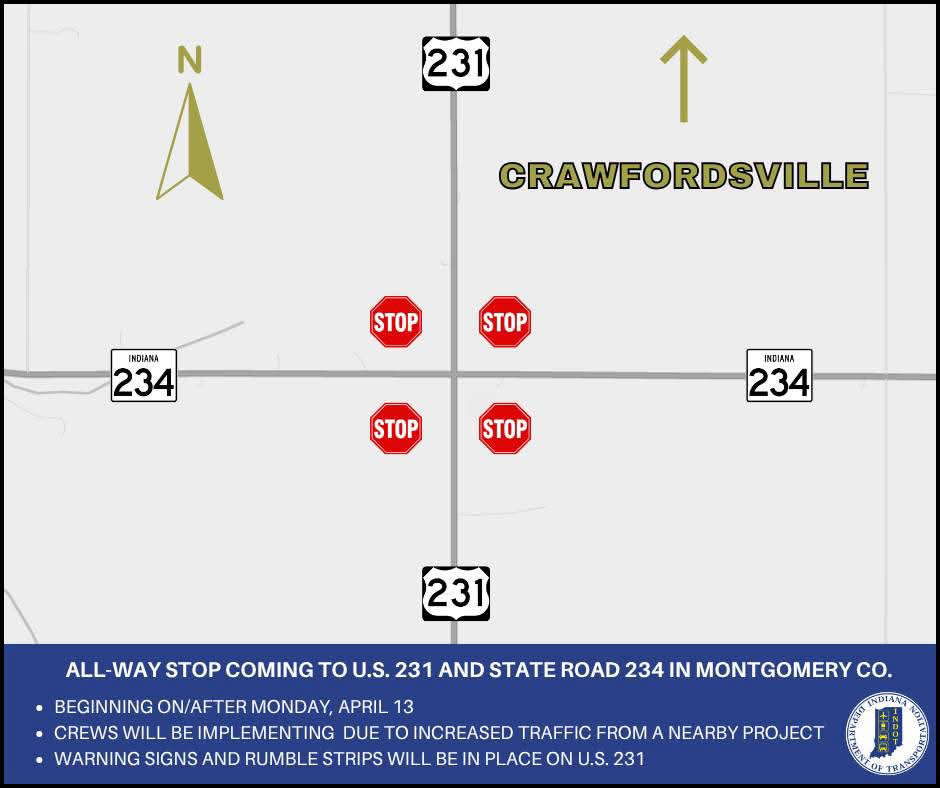 All-way stop coming to U.S. 231 and State Road 234 in Montgomery County
 Duke Energy reminds residents to call 811 before beginning spring digging projects
 Indiana Gov. Mike Braun declares gas tax holiday
 Fire vs Police on the hardwood for good cause Friday night
 Indiana AG warns of human trafficking during Final Four
 Authorities looking for missing Owen County female
 Application period now open for POET Bioprocessing – Cloverdale Community Impact Grants
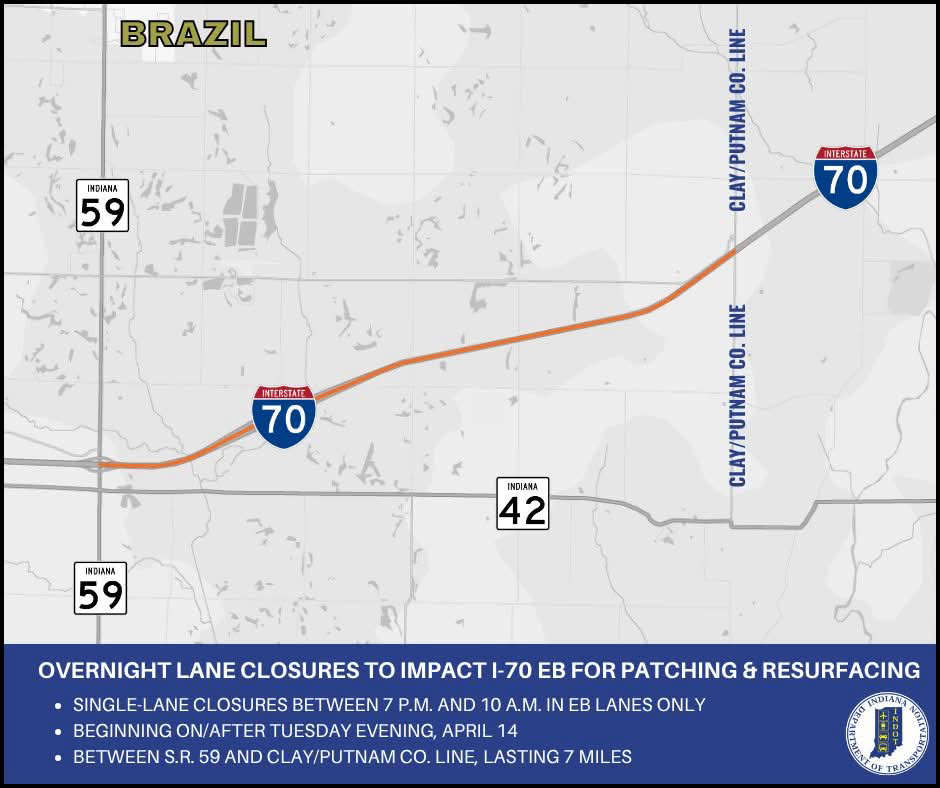 Overnight lane closures to impact I-70 eastbound in Clay County