

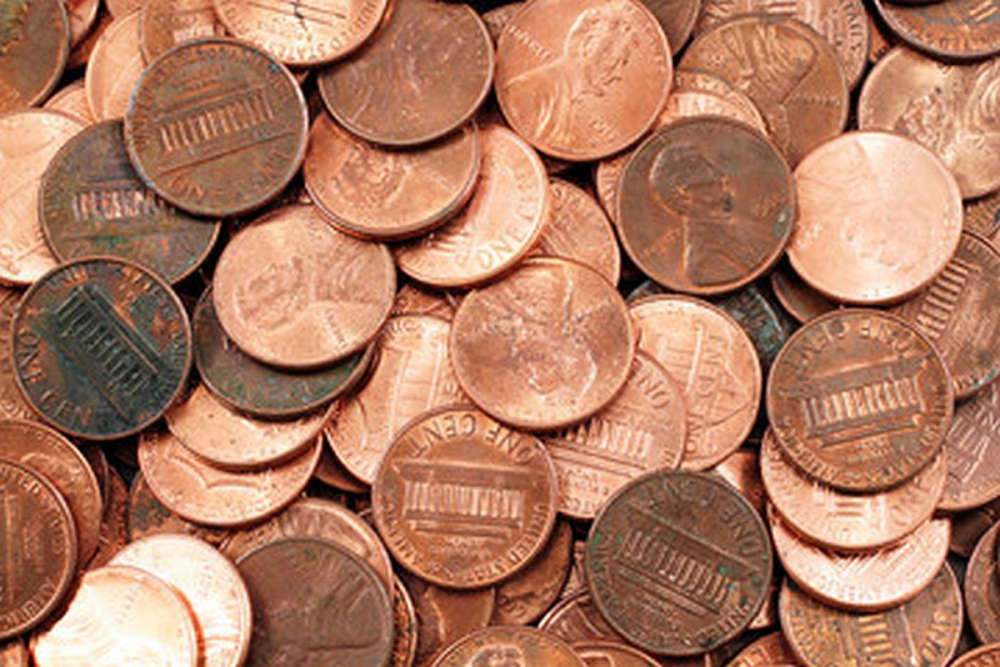
With the federal government phasing out the penny and a resulting coin shortage impacting businesses, the Indiana Department of Revenue has implemented new rules for how retailers handle cash transactions.
A new state law, signed by Governor Mike Braun and effective immediately, establishes standard procedures for rounding cash purchases to the nearest nickel.
Under the new legislation, the rounding rules apply exclusively to cash transactions. Purchases made with credit cards, debit cards, or electronic payments will continue to be charged to the exact cent.
For cash buyers, the law dictates that rounding must take place on the final total price, after taxes have been applied. Retailers are given the flexibility to choose whether to round a total up or down to the next nickel.
State officials noted that any financial gain or loss resulting from this rounding will be added to or deducted from the retailer's income. However, the state ensures its revenue remains unaffected: retailers must still remit the exact, unrounded tax amount to the State of Indiana.
To illustrate how the law works in practice, officials provided the following example: If a customer's total bill, including tax, comes to $6.42, the retailer has the option to round the cash payment up to $6.45 or down to $6.40. The resulting 3-cent gain or 2-cent loss is absorbed by the business. If the tax portion of that bill was 42 cents, the retailer is still required to pay the full 42 cents in tax to the state, regardless of which way the final total was rounded.
The provision took effect the moment Governor Braun signed the legislation.
 Parke, Putnam and Vermillion counties now eligible for FEMA assistance
 Putnam County man sentenced to 35 years for child sex crimes
 Postal Service recommends 2026 holiday mailing and shipping dates
 Code Red: A Contingency Planning Tool
 Gov. Braun leads largest coordinated debris operations in recent state history
 Attorney General Todd Rokita calls on Hoosiers to claim compensation for inflated generic drug prices
 Pennsylvania Attorney General's Cold Case Section, Erie investigators announce arrest of Brazil, IN man in 2002 rape, murder