

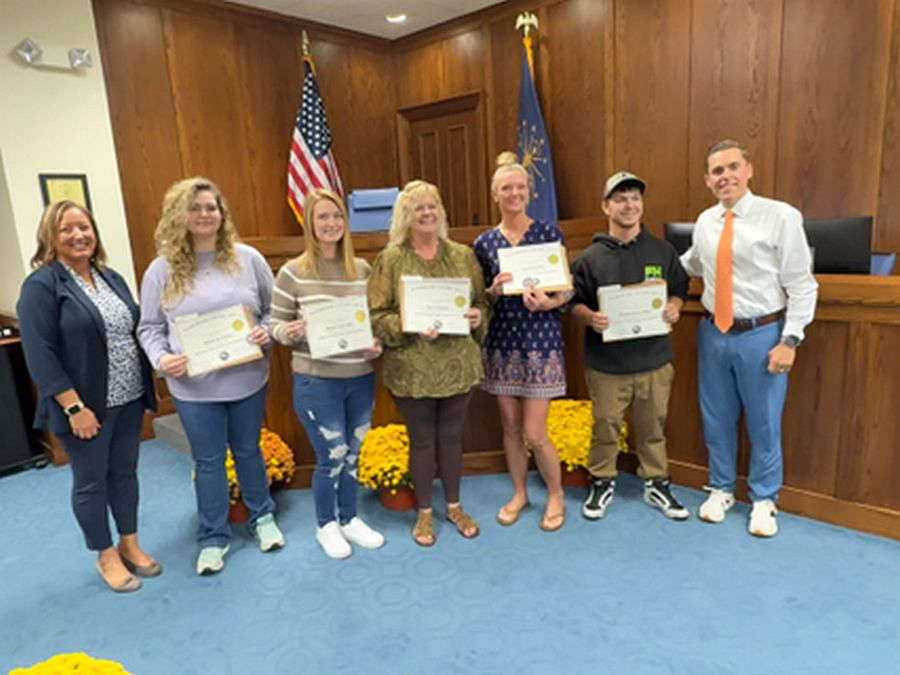
Marshall Superior Court No. 3 held its second Drug Court graduation ceremony on Monday, celebrating five participants who successfully completed the intensive, multi-phase program designed to support recovery and reduce recidivism through accountability, treatment, and community support.
The graduates — Mikayla Penrod, Morgan Smith, Amie Martinez, Kelsey Trent, and Brendan Walters — represent individuals who have completed between 18 months and three years of commitment and progress under the Drug Court’s structured supervision model. Each graduate demonstrated sustained sobriety, compliance with individualized treatment plans, and immense personal growth consistent with the program’s mission of restoring lives and strengthening families.
“These graduates stand as an example when the rule of law is infused with humanity. The rule of law is not a distant force or cold doctrine – It is the structure that makes renewal possible,” said Judge Matthew E. Sarber, who presides over Marshall County’s Drug Court. “It’s not a system designed to punish alone, but to give structure to accountability, and through that structure, the opportunity for a new beginning.”
The Marshall County Drug Court operates under the Indiana Office of Court Services problem-solving court model, utilizing graduated sanctions and incentives to encourage responsibility and long-term behavioral change. Participants engage in regular court appearances, substance use treatment, case management supervision, individual therapy, and community-based support, while receiving incentives for progress and facing structured consequences for setbacks. The collaborative model integrates judicial oversight with multidisciplinary teamwork to address the root causes of criminal behavior tied to substance use disorder.
The Drug Court team is led by Judge Sarber, with Coordinator Christie Johnson, Chief Deputy Prosecutor Nicholas Langowski, Chief Probation Officer Andrea Turnage, Marshall County Community Corrections Officers Anthony Merrill and Scott Kresca, Marshall County Hope representative Kenny Schoff, Kelly Coulopoulos, MSW, LCSW, Michiana Behavioral Health representative Misty Sellers, and Defense Attorney Adrian Arellano.
“These graduates have shown resilience, patience, humility, and strength,” said Coordinator Johnson. “Each of them chose to stay the course, even when it was difficult — and their success today is a testament to that courage.”
The Marshall County Drug Court was established to reduce incarceration rates, enhance community safety, and provide a pathway to sustained recovery through evidence-based treatment and judicial accountability. Since its inception, the program has demonstrated the power of coordinated, compassionate justice in rebuilding lives and strengthening the fabric of the community.
 Parke, Putnam and Vermillion counties now eligible for FEMA assistance
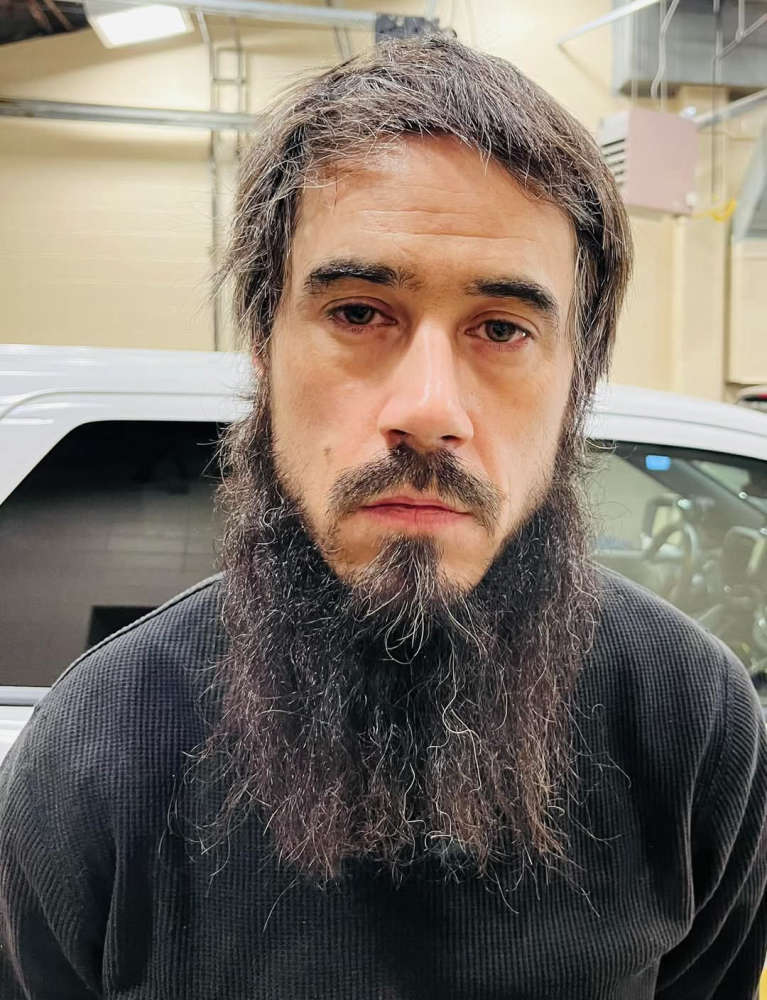 Putnam County man sentenced to 35 years for child sex crimes
 Postal Service recommends 2026 holiday mailing and shipping dates
 Code Red: A Contingency Planning Tool
 Gov. Braun leads largest coordinated debris operations in recent state history
 Attorney General Todd Rokita calls on Hoosiers to claim compensation for inflated generic drug prices
 Pennsylvania Attorney General's Cold Case Section, Erie investigators announce arrest of Brazil, IN man in 2002 rape, murder