

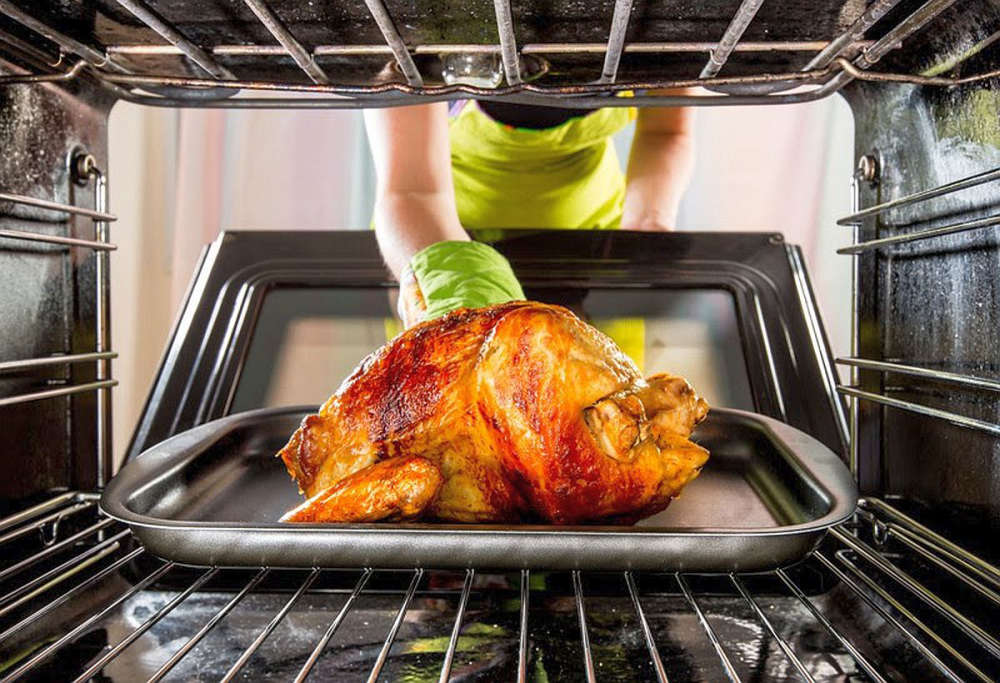
To ensure your Thanksgiving is wholesome without illness, it is important to follow four steps to food safety: clean, separate, cook, and chill, and avoid risky food handling habits that go against USDA guidelines. USDA recognizes eight dangerous habits consumers may fall short of:
#1 Not washing your hands or kitchen surfaces before, during, and after food prep: Handwashing is the first step to avoiding foodborne illness. Wash your hands for at least 20 seconds with soap and water before, during, and after handling food.
#2 Using the same cutting boards and utensils for raw and ready-to-eat foods: Cross-contamination is the spread of bacteria from raw meat and poultry onto ready-to-eat food, surfaces, and utensils. Avoid this by using separate cutting boards — one for raw meat and poultry and another for ready-to-eat foods like fruits and vegetables that will be served raw.
#3 Defrosting your turkey on the kitchen counter: Leaving any frozen package of meat or poultry for more than two hours on the counter at room temperature is dangerous. Even though the center of the package may still be frozen, the outer layer of the food is in the “Danger Zone” between 40 and 140°F — a temperature where foodborne bacteria multiply rapidly.
#4 Consider not washing or rinsing raw turkey: USDA research found that one in four people who wash or rinse poultry cross-contaminate other food items being prepared with germs from the poultry.
#5 Cooking your turkey overnight at a low temperature: It is not safe to cook any meat or poultry in an oven set lower than 325°F. At lower temperatures, meat stays in the Danger Zone for too long. Cook your turkey at 325°F or above and ensure all parts of the turkey reach a safe internal temperature of 165°F.
#6 Relying only on a pop-up temperature indicator: While the pop-up timers found in many turkeys tend to be fairly accurate, they only check the internal temperature in one spot when we recommend three. Always use a food thermometer to ensure your turkey has reached a safe internal temperature of 165 F in the thickest part of the breast, the innermost part of the wing, and the innermost part of the thigh to check its internal temperature.
#7 Stuffing your turkey the night before: USDA recommends against stuffing your turkey since this often leads to bacterial growth.
#8 Keeping leftovers for more than a week: Store leftovers in small shallow containers and put them in the refrigerator. Thanksgiving leftovers are safe to eat for up to four days when stored in the refrigerator. In the freezer, leftovers are safely frozen indefinitely but will keep the best quality for two to six months.
 Former Roachdale Town Marshal sentenced to probation
 Indiana Farm Bureau Insurance announces 2027 summer internship program
 Gov. Braun extends tax filing deadline for Hoosiers impacted by August storms
 Read your FEMA letter carefully
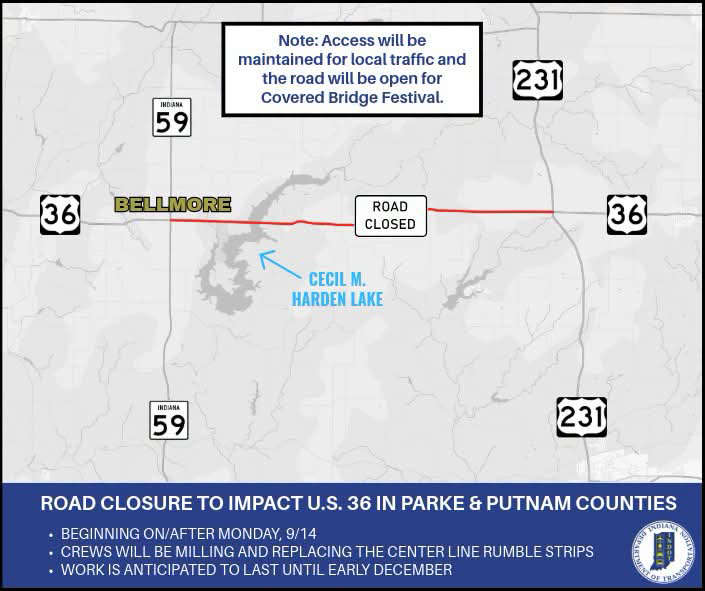 Road closure to impact U.S. 36 in Parke and Putnam counties
 South Vermillion to honor fallen mom all season
 BMV branches closed for Labor Day weekend
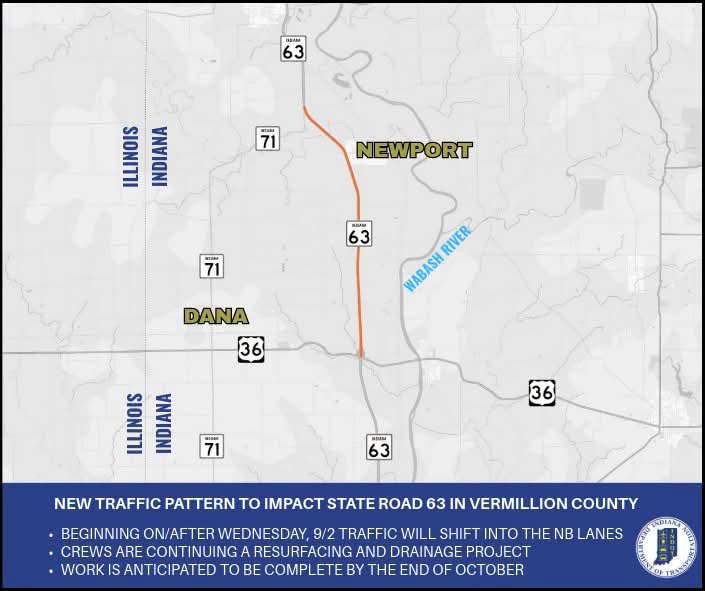 New traffic pattern to impact State Road 63 near Newport
 Riddell National Bank makes new scoreboard reality for Parke Heritage
 Riverton Parke to remember fallen player
 Rockville man arrested after setting fires
 Governor Braun delivers another month of gas savings for Hoosier families
 $120M granted to Indiana to improve healthcare access
 Find a cooling center near you with Indiana 211
 2026 Indiana State Fair celebrates Hoosier spirit, summer fun and memories made
 State health officials and emergency healthcare providers agree to discontinue routine hospital diversion
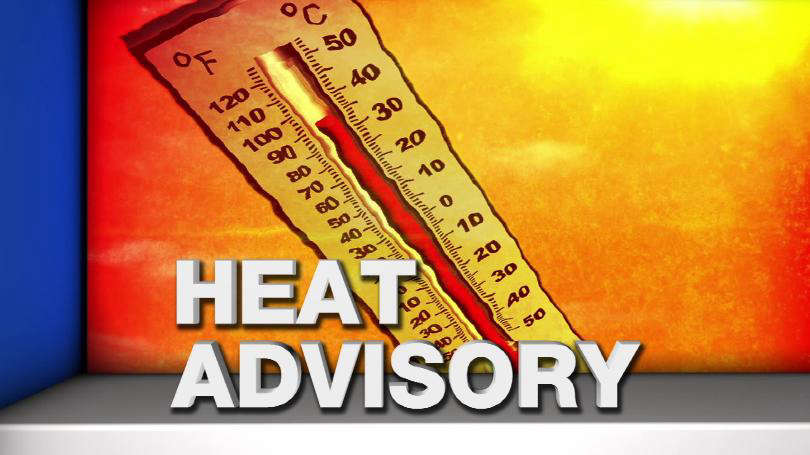 Heat Advisory in effect through Thursday evening
 USDA offers disaster assistance to Ag producers in Indiana impacted by recent flooding
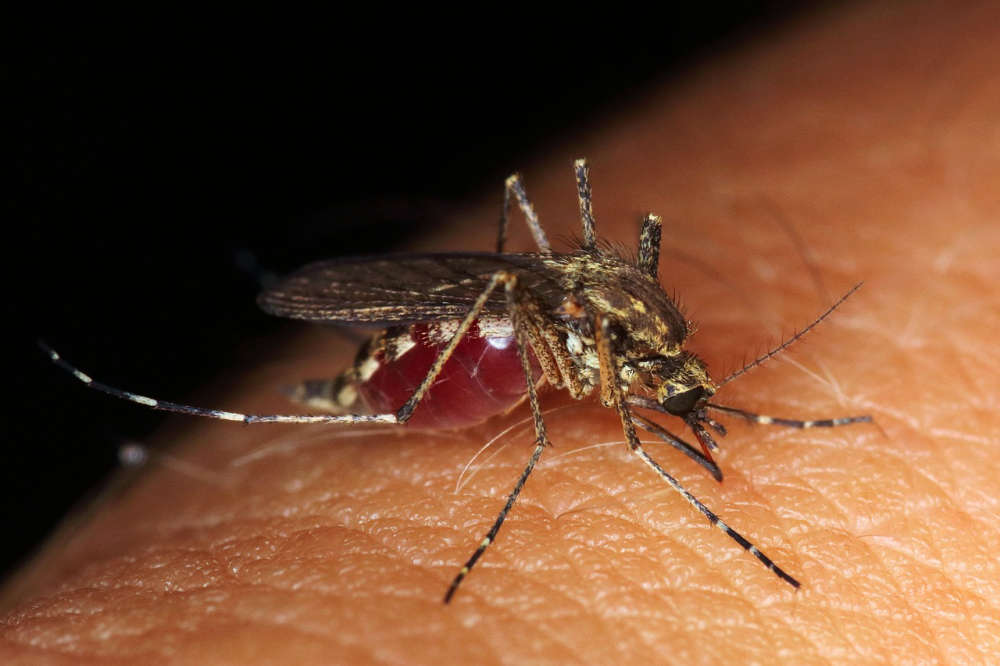 First Indiana human case of West Nile found in Allen County
 Legendary 'Indiana Rangers' receive Presidential Unit Citation, Sagamore of the Wabash for Vietnam War heroism