

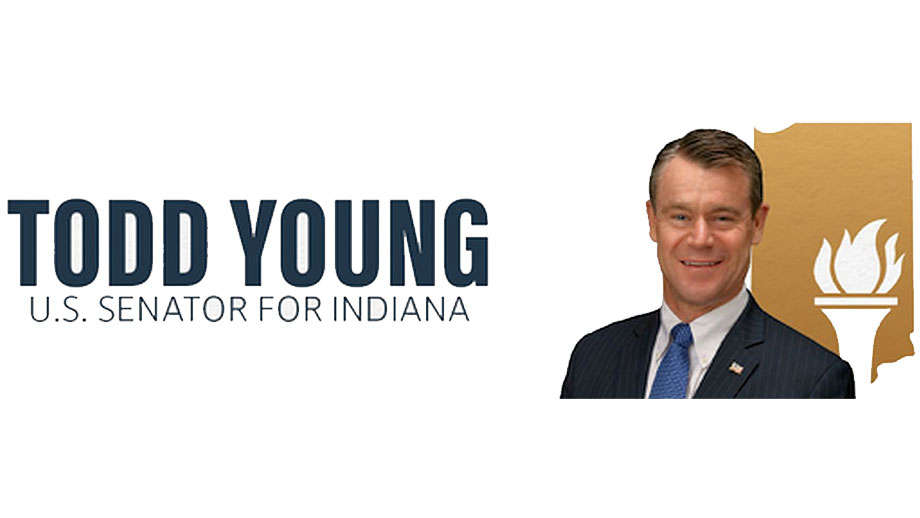
U.S. Senators Todd Young (R-Ind.) and John Hickenlooper (D-Colo.) introduced the bipartisan Critical Materials Future Act to establish a pilot program for the Department of Energy to support domestic critical mineral processing projects.
“Our reliance on global supply chains for critical materials poses a significant national security threat, especially as the Chinese Communist Party continues to manipulate this market,” said Senator Young. “Our bill will take innovative steps to identify opportunities for American leadership and investment in critical material projects, strengthening domestic supply chains and boosting our economic and global competitiveness.”
“China is rivaling American dominance by controlling the critical minerals market,” said Senator Hickenlooper. “Boosting our domestic processing is how we’ll maintain American leadership in the world.”
The U.S. critical minerals list contains 50 minerals – including graphite, nickel, and cobalt – that are essential to our economy, infrastructure, and military capability. Critical minerals are used in smartphones, semiconductors, batteries, advanced defense equipment, and more.
China currently controls 90% of the global processing capacity for rare earth elements and over 80% of the processing for other critical minerals like cobalt, gallium, and graphite. Experts have become increasingly concerned with U.S. dependence on China for critical materials, arguing it poses a significant risk to national security. In August 2023, China announced export controls on gallium and germanium, critical minerals used in semiconductor manufacturing. In October 2023, China introduced export license requirements for graphite, essential for battery anodes. And in June 2023, a cobalt mine in Idaho was forced to shutter its operations before it opened and lay off hundreds of workers as China flooded the market with cheap cobalt.
Specifically, the Critical Materials Future Act grants the Secretary of Energy the authority to deploy innovative financial mechanisms, such as contracts for differences and advanced market commitments, to support critical material processing projects in the United States. The bill also requires the Secretary of Energy to conduct a comprehensive study on the impact of these financial tools on market dynamics and processing projects within the critical materials sector, and to provide recommendations for expanding their use to strengthen America’s processing capabilities.
In addition to Senators Young and Hickenlooper, Senators Lindsey Graham (R-S.C.) and Chris Coons (D-Del.) also cosponsored the legislation.
The Critical Materials Future Act is supported by BPC Action, American Critical Minerals Association, and Employ America.
Full text of the Critical Materials Future Act is available here.
 Indiana Gov. Mike Braun declares gas tax holiday
 Sherlock Holmes to the stage at Parke Heritage this weekend
 Indiana AG warns of human trafficking during Final Four
 Billie Creek Village ready for another season
 Voter registration deadline April 6
 Flags ordered to half-staff for Captain Seth Koval
 Conrady seeks Rockville Town Board seat
 Peebles looks to keep Vermillion County Commissioner seat
 Indiana launches enforcement campaign to target distracted driving and speeding
 Indianapolis Indians named title partner of the 2026 Indiana State Fair
 Carlisle man leads Parke County officers, others on chase
 Game audio: 2A State Championship, Parke Heritage 57, Westview 56 (Air date March 28, 2026)
 Parke Heritage captures first ever state championship
 New Space Force license plate design
 Indiana announces launch of enhanced system for Hoosier military and overseas voters
 Wolves look to take final step in 2A title game