

U.S. Secretary of Agriculture Brooke L. Rollins announced the reorganization of the U.S. Department of Agriculture (USDA), refocusing its core operations to better align with its founding mission of supporting American farming, ranching, and forestry.
Over the last four years, USDA’s workforce grew by 8%, and employees’ salaries increased by 14.5% - including hiring thousands of employees with no sustainable way to pay them. This all occurred without any tangible increase in service to USDA’s core constituencies across the agricultural sector. USDA’s footprint in the National Capital Region (NCR) is underutilized and redundant, plagued by rampant overspending and decades of mismanagement and costly deferred maintenance. President Trump has made it clear government needs to be scrutinized, and after this thorough review of USDA, the results show a bloated, expensive, and unsustainable organization.
To be clear, all critical functions of the Department will continue uninterrupted. For example, we are at the height of fire season, and to date, have not only exceeded hiring goals, but have preserved the ability to continue to hire. Earlier this year, Secretary Rollins issued a Secretarial Memorandum exempting National Security and Public Safety positions from the federal hiring freeze. These 52 position classifications carry out functions that are critical to the safety and security of the American people, our national forests, and the inspection and safety of the Nation’s agriculture and food supply system. These positions will not be eliminated. However, employees may be subject to relocation.
“American agriculture feeds, clothes, and fuels this nation and the world, and it is long past time the Department better serve the great and patriotic farmers, ranchers, and producers we are mandated to support. President Trump was elected to make real change in Washington, and we are doing just that by moving our key services outside the beltway and into great American cities across the country,” said Secretary Rollins. “We will do so through a transparent and common-sense process that preserves USDA’s critical health and public safety services the American public relies on. We will do right by the great American people who we serve and with respect to the thousands of hardworking USDA employees who so nobly serve their country.”
The reorganization consists of four pillars:
- Ensure the size of USDA’s workforce aligns with available financial resources and agricultural priorities
- Bring USDA closer to its customers
- Eliminate management layers and bureaucracy
- Consolidate redundant support functions
To bring USDA closer to the people it serves while also providing a more affordable cost of living for USDA employees, USDA has developed a phased plan to relocate much of its Agency headquarters and NCR staff out of the Washington, D.C. area to five hub locations. The Department currently has approximately 4,600 employees within the National Capital Region (NCR). This Region has one of the highest costs of living in the country, with a federal salary locality rate of 33.94%. In selecting its hub locations, USDA considered where existing concentrations of USDA employees are located and factored in the cost of living. Washington, D.C. will still hold functions for every mission area of USDA at the conclusion of this reorganization, but USDA expects no more than 2,000 employees will remain in the NCR.
USDA will vacate and return to the General Services Administration the South Building, Braddock Place, and the Beltsville Agricultural Research Center, and revisit utilization and functions in the USDA Whitten Building, Yates Building, and the National Agricultural Library. The George Washington Carver Center will also be utilized until space optimization activities are completed. These buildings have a backlog of costly deferred maintenance and currently are occupied below the minimum set by law. For example, the South Building has approximately $1.3 billion in deferred maintenance and has an average daily occupancy of less than 1,900 individuals for a building that can house over 6,000 employees.
USDA’s five hub locations and current Federal locality rates are:
- Raleigh, North Carolina (22.24%)
- Kansas City, Missouri (18.97%)
- Indianapolis, Indiana (18.15%)
- Fort Collins, Colorado (30.52%)
- Salt Lake City, Utah (17.06%)
This is only the first phase of a multi-month process. Over the next month and where applicable, USDA senior leadership will notify offices with more information on relocation to one of the regional hubs.
To make certain USDA can afford its workforce, this reorganization is another step of the Department’s process of reducing its workforce. Much of this reduction was through voluntary retirements and the Deferred Retirement Program (DRP), a completely voluntary tool. As of today, 15,364 individuals voluntarily elected deferred resignation.
 Riverton Parke looks to continue momentum
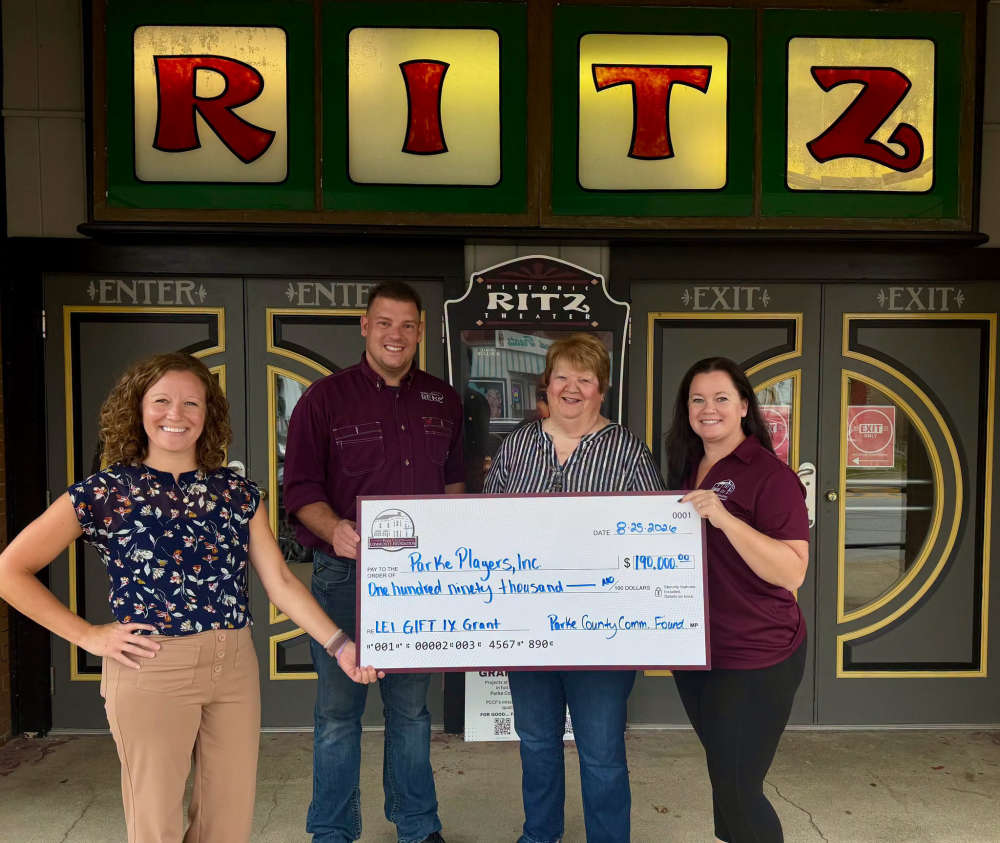 Parke County Community Foundation awards funds for Ritz renovations
 U.S. Marshals aid local law enforcement to find suspect
 Gov. Braun continues to deliver on promise to keep local governments whole during gas tax holiday
 Indiana state forests to offer open houses
 Benefit ride for Alisha Reynolds on October 24
 Former Roachdale Town Marshal sentenced to probation
 Indiana Farm Bureau Insurance announces 2027 summer internship program
 Read your FEMA letter carefully
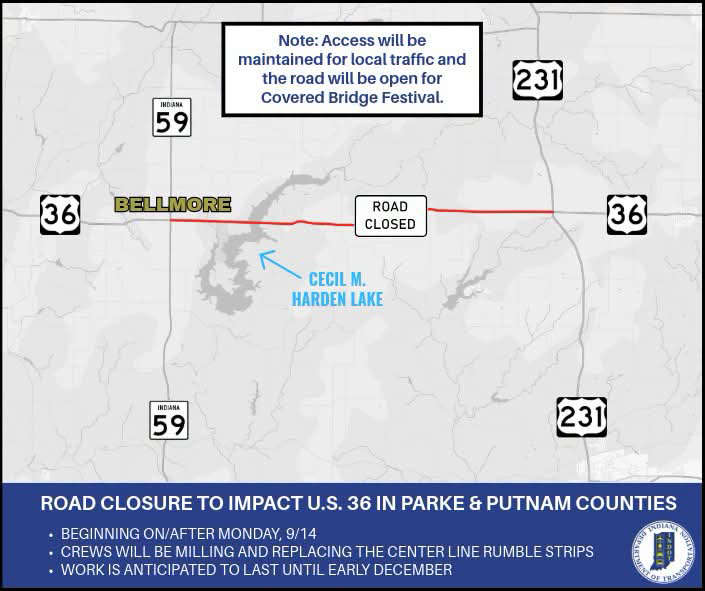 Road closure to impact U.S. 36 in Parke and Putnam counties
 South Vermillion to honor fallen mom all season
 BMV branches closed for Labor Day weekend
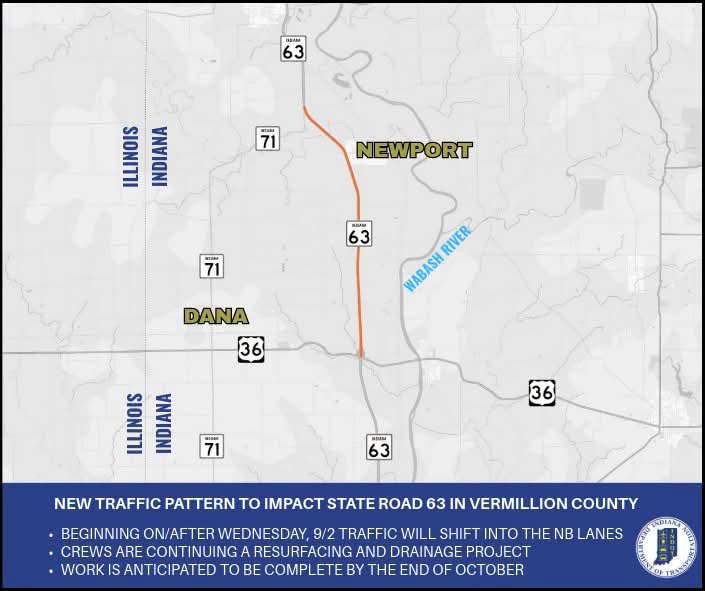 New traffic pattern to impact State Road 63 near Newport
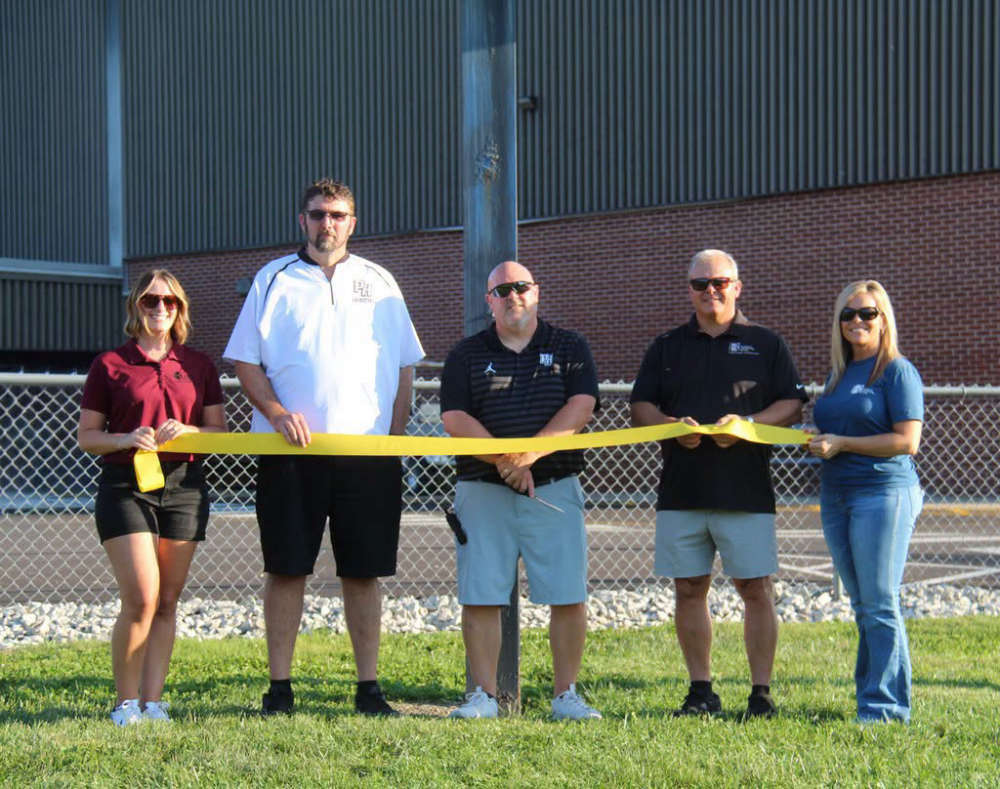 Riddell National Bank makes new scoreboard reality for Parke Heritage
 Riverton Parke to remember fallen player