


Attorney General Todd Rokita this week sued the Biden administration to protect Hoosiers’ jobs, property and freedom from an overreaching U.S. Environmental Protection Agency rule redefining “navigable waters” under the Clean Water Act.
The new Waters of the United States (WOTUS) rule would force Indiana landowners to beg the permission of federal bureaucrats before using their own property in ways deemed to impact certain ponds, streams, ditches or other wet areas of ground.
“We all want to conserve and preserve our natural resources,” Attorney General Rokita said. “At the same time, exercising wise stewardship over the environment does not require citizens to surrender their legitimate liberties and rights to the federal government. And, in fact, we cannot tolerate edicts designed to subjugate free people in such a manner.”
Twenty-four states have joined together to bring the lawsuit against the EPA. Attorney General Rokita thanked his West Virginia counterpart for organizing the multistate coalition. The lawsuit also names the U.S. Army Corps of Engineers as a defendant.
The Biden administration’s new final rule is the culmination of a decades-long rulemaking process to define the geographic reach of the EPA’s and Army Corps of Engineers’ authority in regulating streams, wetlands and other water bodies under the Clean Water Act. It follows the Trump administration's 2020 Navigable Waters Protection Rule, which offered a more restrained vision of federal jurisdiction.
If the final rule is left in place, the lawsuit states, “then ranchers, farmers, miners, homebuilders, and other landowners across the country will struggle to undertake even the simplest of activities on their own property without fear of drawing the ire of the federal government.”
The lawsuit further states: “Landowning Americans of all stripes will thus be left with a choice: (a) fight their way through an expensive and lengthy administrative process to obtain complex jurisdictional determinations and permits or (b) face substantial civil and criminal penalties. The Final Rule’s ambiguous environmental benefits do not justify any of this.”
Provided by the IN Attorney General's office
 Indiana AG reminds Hoosiers to be alert to signs of human trafficking
 Fairview Park receives OCRA grant to rehab water system
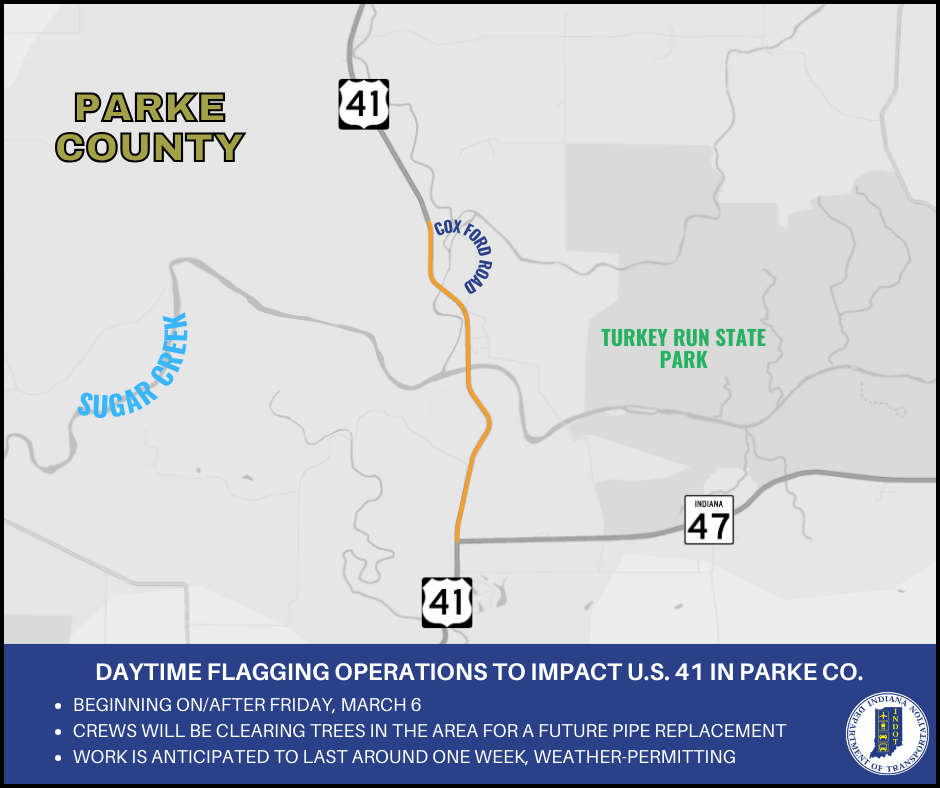 Daytime flagging operations to impact U.S. 41 for tree clearing for a future project
 Rosedale man charged with child molesting, soliciting
 Red Cross seeks donations to curb severe blood shortage
 Greencastle - Parke Heritage again, South Putnam vs Southmont on GIANT fm Sports
 Bill to increase access to veterinarians signed into law
 INDOT implements new roadway worker safety initiative: Project Greenlight
 Southwest Parke schools synchronous e-learning on Wednesday
 Chase Edward Bennett, 17, of Hillsdale
 Riverton Parke student-athlete dies in automobile crash
 USDA announces enrollment period for Farmer Bridge Payments
 Heritage Christian ready for 'good matchup' against Parke Heritage
 Gov. Braun Launches READI 2.0 Arts & Culture Initiative
 Brazil woman sentenced in overdose death of Greencastle man