

As of Aug. 28, DNR has tested deer and confirmed EHD in Wabash, Allen, Huntington, Wells, Porter and Perry counties.
An early-season outbreak of epizootic hemorrhagic disease (EHD) in deer, which started in the northern region of Indiana this year, has been detected by the Indiana Department of Natural Resources (DNR).
Humans are not at risk for contracting EHD.
EHD is a viral disease that commonly affects white-tailed deer and is transmitted by biting midges, aka sand gnats or “no-see-ums.” Cases typically occur during late summer and early fall, and there is evidence that outbreaks can be more severe in years in which there is a wet spring followed by a hot, dry fall. EHD is often fatal to deer, but some can recover and develop immunity.
A significant number of suspected EHD cases have been reported in deer in Wabash, Allen, Pike, Warrick, Miami, Huntington and Porter counties, along with additional reports typical for what is reported each year in 22 other counties. As of Aug. 28, DNR has tested deer and confirmed EHD in Wabash, Allen, Huntington, Wells, Porter and Perry counties.
Deer infected with EHD may display unusual behaviors such as lethargy, excessive salivation, or disorientation. EHD also causes fever in deer, which can cause them to seek water. As a result, many deer that die from EHD are found in or near open water sources like ponds and rivers.
Anyone who finds a deer that is showing signs of EHD or finds one dead in water is asked to report it at on.IN.gov/sickwildlife.
DNR monitors for EHD annually; however, severe outbreaks don’t occur every year. The severity of EHD in a single year depends on a variety of factors including climate, immunity and other ecological factors. DNR monitors the yearly impact of EHD on the deer population and makes changes to the allowable deer harvest to offset major effects.
Because of the early high level of deer mortality in Wabash County, DNR has started the process of lowering the county bonus antlerless quota for deer hunting in that county from two bonus antlerless deer to one bonus antlerless deer to offset the EHD outbreak. EHD detections can be continually monitored at on.IN.gov/EHD.
Not every deer in an affected area will contract EHD. One sign a deer has recovered from EHD is sloughing or breaking on their hooves. DNR asks that successful hunters use the Deer After Hunt Survey to report the condition of their deer’s hooves, including both normal hooves and hooves that show evidence of sloughing or damage.
 Emergency Alert System (EAS) nationwide test Tuesday
 Gov. Braun urges veterans to claim property tax relief before January deadline
 With sectional title in hand, Riverton Parke looks for more
 Prep your vehicle for winter weather
 Expanded opportunities for incarcerated Hoosiers through 10-year Ivy Tech partnership
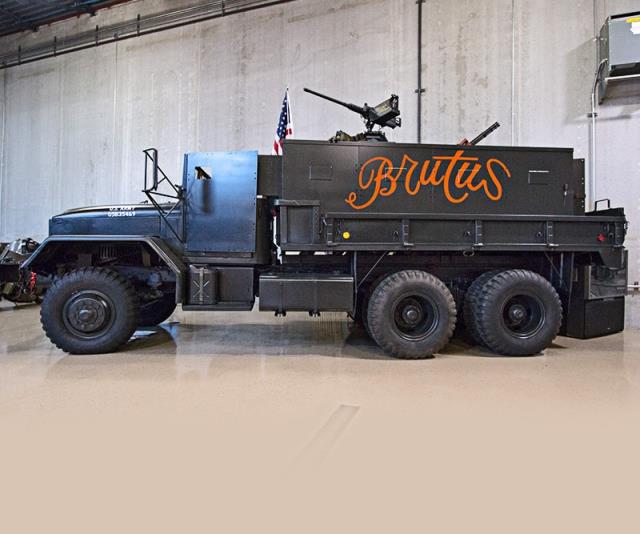 Legendary Vietnam gun truck to ride DC National Veterans Parade
 Rockville man arrested on CSAM charge
 Conservation officers remind hunters to prioritize safety during deer season
 Ex-postal worker receives sentence for stealing checks in massive $34 million fraud scheme
 Christmas Nights of Lights returns to Indiana State Fairgrounds for the 2026 holiday season
 MMR vaccines available at Parke County Health Department
 Governor Braun extends gas tax savings
 Smith, Russell earn spots on Rockville Town Board
 Indiana Department of Education changing how schools are graded
 Polls open statewide at 6 a.m. Tuesday
 Keystone and Caledonia Farmers Elevator agree to pursue merger following successful due diligence
 Indiana BMV extends hours ahead of general election