

As of Aug. 28, DNR has tested deer and confirmed EHD in Wabash, Allen, Huntington, Wells, Porter and Perry counties.
An early-season outbreak of epizootic hemorrhagic disease (EHD) in deer, which started in the northern region of Indiana this year, has been detected by the Indiana Department of Natural Resources (DNR).
Humans are not at risk for contracting EHD.
EHD is a viral disease that commonly affects white-tailed deer and is transmitted by biting midges, aka sand gnats or “no-see-ums.” Cases typically occur during late summer and early fall, and there is evidence that outbreaks can be more severe in years in which there is a wet spring followed by a hot, dry fall. EHD is often fatal to deer, but some can recover and develop immunity.
A significant number of suspected EHD cases have been reported in deer in Wabash, Allen, Pike, Warrick, Miami, Huntington and Porter counties, along with additional reports typical for what is reported each year in 22 other counties. As of Aug. 28, DNR has tested deer and confirmed EHD in Wabash, Allen, Huntington, Wells, Porter and Perry counties.
Deer infected with EHD may display unusual behaviors such as lethargy, excessive salivation, or disorientation. EHD also causes fever in deer, which can cause them to seek water. As a result, many deer that die from EHD are found in or near open water sources like ponds and rivers.
Anyone who finds a deer that is showing signs of EHD or finds one dead in water is asked to report it at on.IN.gov/sickwildlife.
DNR monitors for EHD annually; however, severe outbreaks don’t occur every year. The severity of EHD in a single year depends on a variety of factors including climate, immunity and other ecological factors. DNR monitors the yearly impact of EHD on the deer population and makes changes to the allowable deer harvest to offset major effects.
Because of the early high level of deer mortality in Wabash County, DNR has started the process of lowering the county bonus antlerless quota for deer hunting in that county from two bonus antlerless deer to one bonus antlerless deer to offset the EHD outbreak. EHD detections can be continually monitored at on.IN.gov/EHD.
Not every deer in an affected area will contract EHD. One sign a deer has recovered from EHD is sloughing or breaking on their hooves. DNR asks that successful hunters use the Deer After Hunt Survey to report the condition of their deer’s hooves, including both normal hooves and hooves that show evidence of sloughing or damage.
–DNR report
 Indiana State Police, local law enforcement increasing patrols during holiday season
 Indiana State University receives $8.5 Million Lilly Endowment grant to lead on AI
 Hoosiers reminded to practice healthy habits this holiday season
 The man behind Marsh Supermarkets has passed away
 Major modernization, expansion, investment at Hydrite in Terre Haute
 Indiana DNR holiday gift packs offer savings on state park access, camping and more
 Riverton Parke seeks to win in honor of fallen teammate
 Dana Festival of Lights right around the corner
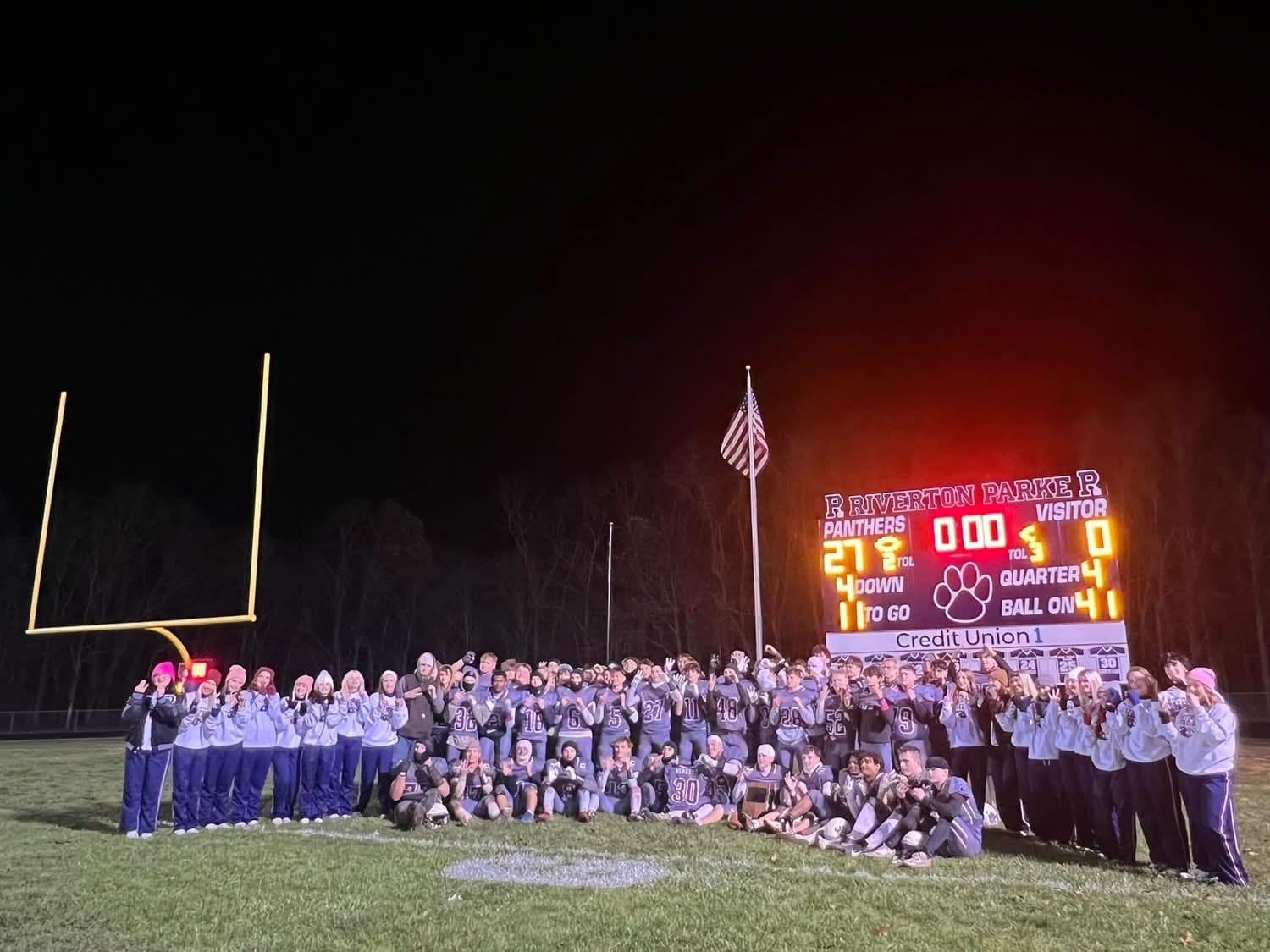 Riverton Parke looks to continue historic run
 Indiana BMV Branches to close for Thanksgiving holiday weekend
 ISP investigating four shooting deaths
 Indiana Thanksgiving food costs down despite higher U.S. average