
There is currently one CWD positive area in Indiana that includes LaGrange, Steuben, Noble and DeKalb counties.
As a result of Indiana’s positive detection of chronic wasting disease (CWD) in April, the Indiana Department of Natural Resources (DNR) has restricted moving deer from any CWD Positive Area for rehabilitation purposes.
CWD, described in detail at on.IN.gov/cwd, is a fatal neurological disease in white-tailed deer.
With the change, an individual who finds an orphaned, sick, or injured deer in a CWD Positive Area may only surrender the deer to a DNR-permitted wild animal rehabilitator that is located within a CWD Positive Area.
“This restriction is to help minimize the spread of CWD to new parts of the state, as fawns can carry this disease without appearing sick,” said DNR’s Deer Program lead Joe Caudell.
Currently, there is one CWD Positive Area in Indiana. It includes LaGrange, Steuben, Noble, and DeKalb counties. The state’s first positive case of CWD in white-tailed deer was confirmed by DNR in LaGrange County. While no deer have been documented in Steuben, Noble, or DeKalb counties, those counties are considered part of the CWD Positive Area because of their proximity to where the CWD-positive deer was found.
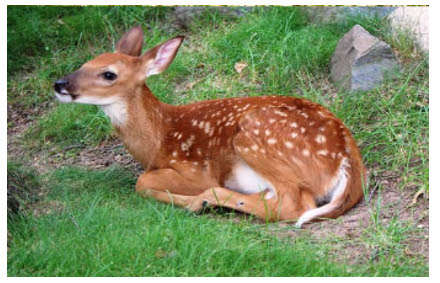
During their first few weeks of life, fawns often hide by themselves, motionless, to avoid predators while the mother seeks food.
“If you find a fawn alone, remember this, and help keep wildlife wild by letting it be, giving it space, and leaving the area,” Caudell said. “Its mother is likely nearby.”
If you encounter a deer that appears to be injured, consider letting the circle of life take its course, as difficult as this decision might be. If you plan to intervene with an injured or orphaned animal, learn about best practices at on.IN.gov/keepwildlifewild.
Before contacting a permitted wildlife rehabilitator for assistance, confirm that the deer is truly injured or orphaned. Look for obvious signs of injury, lethargy, constant vocalization, or an infestation of insects. Another reason for contacting a wildlife rehabilitator for assistance is having knowledge that the mother has been killed or hasn’t returned in several days (remembering that the mother may return only at night). A list of permitted rehabilitators is at on.IN.gov/wildliferehab.
If you see a deer that appears diseased, keep your distance and report it at on.IN.gov/sickwildlife. A DNR health biologist will review the case and determine if action is needed.
For best practices for the removal of dead wildlife, visit on.IN.gov/livingwithwildlife.
–DNR report
 With sectional title in hand, Riverton Parke looks for more
 Nearly 3,000 Indiana students to explore career pathways at LENS Apprenticeship Showcase
 Prep your vehicle for winter weather
 Expanded opportunities for incarcerated Hoosiers through 10-year Ivy Tech partnership
 Legendary Vietnam gun truck to ride DC National Veterans Parade
 Rockville man arrested on CSAM charge
 Conservation officers remind hunters to prioritize safety during deer season
 Ex-postal worker receives sentence for stealing checks in massive $34 million fraud scheme
 Christmas Nights of Lights returns to Indiana State Fairgrounds for the 2026 holiday season
 MMR vaccines available at Parke County Health Department
 Governor Braun extends gas tax savings
 Smith, Russell earn spots on Rockville Town Board
 Indiana Department of Education changing how schools are graded
 Polls open statewide at 6 a.m. Tuesday
 Keystone and Caledonia Farmers Elevator agree to pursue merger following successful due diligence
 Indiana BMV extends hours ahead of general election
 INDOT reminds drivers stay alert for road crews, Project Greenlight to increase worker visibility
 GROWMARK invests in Wabash Valley Resources’ Indiana ammonia fertilizer project