

Earlier this month the Marshall County Commissioner approved an ordinance on the first reading that establishes the purpose and use of the fund in the Emergency Preemptive Internet Communications (EPIC) Fund.
In 2002, the Marshall County Board of Commissioners approved Health Officer Dr. Byron Holm’s request to pursue the EPIC pilot program through the Indiana Department of Health. The purpose of that program was to expand emergency preparedness communications via internet access across the county by the purchase and installation of nine towers and antennae. As part of the pilot program, a portion of the funds were utilized from the Cumulative Capital Development Fund.
To date, seven towers have been installed throughout Marshall County. Tower sites include one each in Culver, at Ancilla College, in Polk Township, in Bourbon, Tippecanoe Township, at the Marshall County Highway Garage, and the Marshall County Sheriff’s Department.
County Health Director, Dr. Byron Holm, has the forethought to offer use of the towers to private vendors for a rental fee. The purpose of the rental fee was for future development and tower maintenance.
County Auditor’s Office requested the creation of an ordinance that details how the funds are obtained and how they can be used as required by the State Board of Accounts.
The funds in the EPIC Fund are to be used for the purpose of erecting and maintaining communication towers and internet services throughout the county for emergency preparedness. The County Auditor will deposit tower rents into the EPICS Fund.
The County Treasurer will invest any money accumulated in the EPICS Fund and any interest received from the investment will remain in the EPICS Fund. Currently there is approximately $400,000 in the fund.
John Grolich said the EPICS Fund was developed to secure high speed wireless internet to emergency responder headquarters and not for two-way communications. He said there are still two towers to be erected at an estimated cost of $40,000 to $60,000 per tower.
Grolich explained that the EPICS Fund isn’t for two-way radio communications which experiences issues in the county although the towers can be used to place antennas on to assist if necessary. He said the funds are not allowable to update two-way communications.
Grolich said new radios are necessary to improve two-way communication but the radio the could meet our needs are $6,000 to $7,000 each. He went on to say the cost to improved communications in Marshall County would be over $1 million a site and ideally Marshall County would need two more sites.
Commissioner Jesse Bohannon suggested investigating the ability to have adequate communications for police and fire. He said the county needs to take an in-depth look at the two-way communication dead spots in the county. The commissioner commented that with that high of a price tag the county would have to look at funding a solution over a couple of years.
 With sectional title in hand, Riverton Parke looks for more
 Nearly 3,000 Indiana students to explore career pathways at LENS Apprenticeship Showcase
 Prep your vehicle for winter weather
 Expanded opportunities for incarcerated Hoosiers through 10-year Ivy Tech partnership
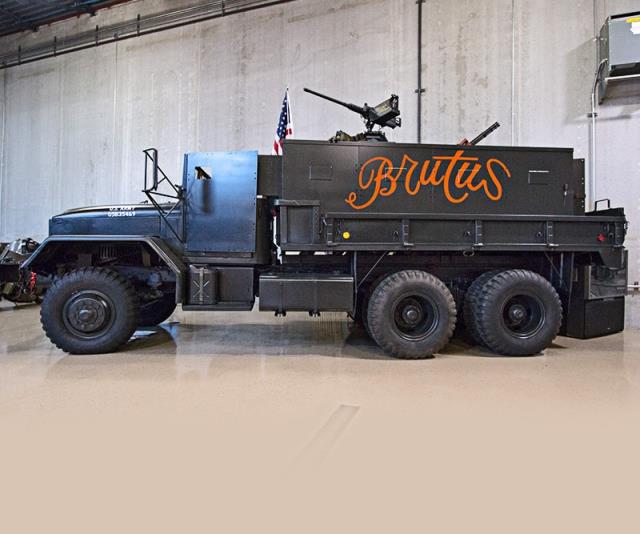 Legendary Vietnam gun truck to ride DC National Veterans Parade
 Rockville man arrested on CSAM charge
 Conservation officers remind hunters to prioritize safety during deer season
 Ex-postal worker receives sentence for stealing checks in massive $34 million fraud scheme
 Christmas Nights of Lights returns to Indiana State Fairgrounds for the 2026 holiday season
 MMR vaccines available at Parke County Health Department
 Governor Braun extends gas tax savings
 Smith, Russell earn spots on Rockville Town Board
 Indiana Department of Education changing how schools are graded
 Polls open statewide at 6 a.m. Tuesday
 Keystone and Caledonia Farmers Elevator agree to pursue merger following successful due diligence
 Indiana BMV extends hours ahead of general election
 INDOT reminds drivers stay alert for road crews, Project Greenlight to increase worker visibility
 GROWMARK invests in Wabash Valley Resources’ Indiana ammonia fertilizer project