


The emergency appeal to stay the Environmental Protection Agency’s plans to require strict greenhouse gas emissions standards is pending before Supreme Court Chief Justice John Roberts.
Attorneys general in 25 states have sent an emergency appeal to the U.S. Supreme Court asking it to immediately halt a Biden administration rule they say threatens to shutter the country’s remaining fleet of coal-fired power plants.
The emergency appeal to stay the Environmental Protection Agency’s plans to require strict greenhouse gas emissions standards is pending before Supreme Court Chief Justice John Roberts because the states say the D.C. Circuit Court of Appeals is sitting on a number of lawsuits without a decision, and that more time is needed before implementing a decision about technologies like carbon capture and storage. Roberts, having appeal jurisdiction over the D.C. Circuit on what is commonly referred to as the “shadow docket,” could deny the request, send it along to the full court, or issue a brief temporary stay while the matter is further briefed on an expedited schedule.
The filing, led by Indiana Attorney General Todd Rokita and West Virginia Attorney General Patrick Morrisey, said the EPA has overstepped its authority, taking away Congress’ power, as it mandates greenhouse gas regulations that are impossible to meet because the technology either currently doesn’t exist, or would be so cost prohibitive that it would make using coal impossible.
The appeal to the nation’s highest court also says that because of future pollution targets, energy companies need to make investment and permitting decisions in advance and that the EPA cannot meet those timelines itself, risking millions of sunken or lost costs for public utilities that would be passed along to consumers.
Attorneys argue that if the Biden administration’s rule is allowed to continue, it will mean that hundreds of megawatts will be forced offline, leading to power shortages during critical weather during the summer and winter.
The rule would force 90% of carbon dioxide from the plants to be captured and stored by 2032 and 40% of the plants to establish co-firing with natural gas by 2030.
Many states have invested in the promise of carbon capture and storage as one way to mitigate the greenhouse gases produced by burning coal. The idea is to capture the flue gas and then pipe it either to underground storage or sell it, thereby reducing the amount of greenhouse gases released into the environment.
However, the states argue that even though the EPA has adopted standards and rules that embrace the carbon capture and storage technology, the technology has not been proven successful or economically feasible.
The emergency appeal also said that the carbon capture technology will require plant owners to buy more fuel, increasing the cost to run a plant, and that the start-up times will be affected. They claim the new units will have a hard time operating at low loads.
Though many of the goals and targets have deadlines reaching years into the future, the states’ attorneys general say that the permitting, planning and investment needed to comply with the EPA’s rules will take years, and cost states millions (the EPA often delegates regulation and enforcement of federal rules to the states).
In the lawsuit, they say that complying with the rule and enforcing it will eat up staff time on a task that is scientifically as well as economically impossible. Furthermore, the states will have no ability to recover the costs, and any costs public utilities will sink into the mandate could be passed along to consumers.
 GE Aerospace to make millions of dollars of investment in Terre Haute, Lafayette
 Phelps looks to claim Vermillion County Commissioner District 2 seat
 Rodney Atkins to perform at Putnam County Fairgrounds
 Smith looks to punch ticket to Rockville Town Board seat
 Safe Zones enforcement to resume on I-70 in Hancock Co., begin on I-65 in Jasper Co.
 IDHS focuses on raising awareness during Severe Weather Preparedness Week, March 8-14
 Parke Heritage to Martinsville, North Vermillion headed to Frankfort for boys regionals
 Martin looks to bring experience to Parke County Commissioner District 2 Seat
 Penny-rounding for retailers
 No intentional wrongdoing alleged in crash blamed for death of US Rep. Baird’s wife
 Hoover looks to turn Parke County Commissioner District 2 seat Blue
 Indiana earns top credit rating from major agency
 Fairview Park receives OCRA grant to rehab water system
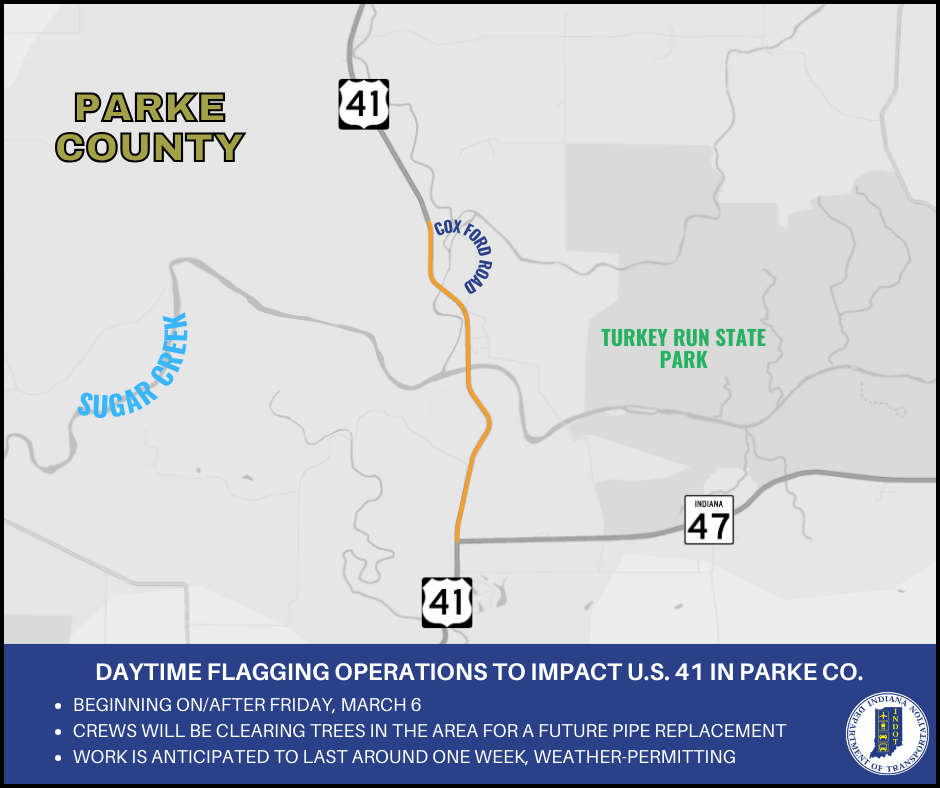 Daytime flagging operations to impact U.S. 41 for tree clearing for a future project
 Rosedale man charged with child molesting, soliciting
 Red Cross seeks donations to curb severe blood shortage
 Greencastle - Parke Heritage again, South Putnam vs Southmont on GIANT fm Sports
 Bill to increase access to veterinarians signed into law
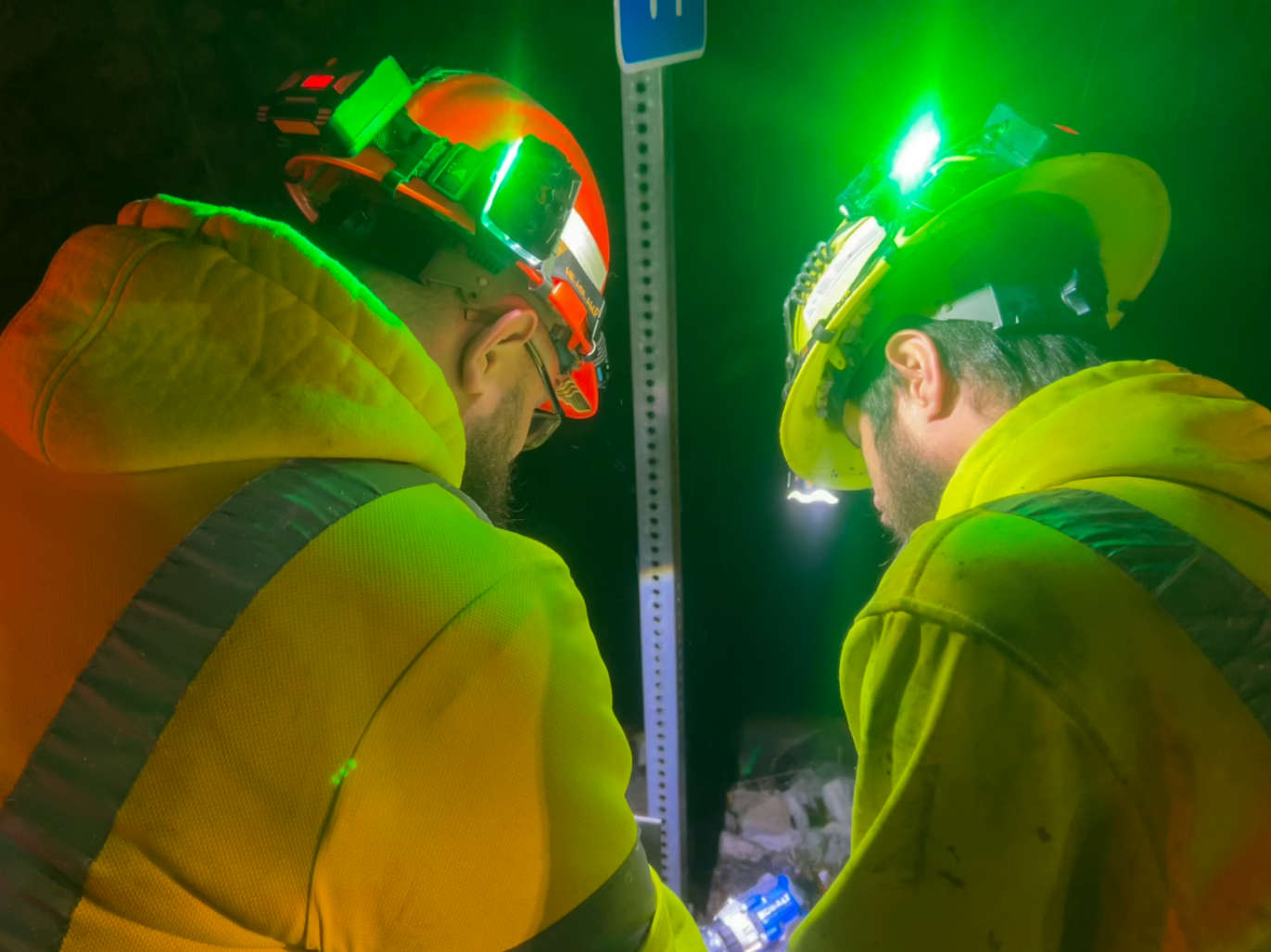 INDOT implements new roadway worker safety initiative: Project Greenlight