

If you’re struggling to part ways with your Christmas tree, consider this: More than one-third (35 percent) of U.S. home fires involving Christmas trees occur in January.
With this post-holiday fire hazard in mind, the National Fire Protection Association (NFPA®) is strongly encouraging prompt removal of Christmas trees after the holiday season.
“As much as we all enjoy the look and feel of Christmas trees in our homes, they’re large combustible items that have the potential to result in serious fires,” said Lorraine Carli, vice president of Outreach and Advocacy at NFPA. “The longer they’re in the home, the more of a risk they present.”
According to NFPA data, Christmas tree fires don’t happen often, but when they do occur, they’re more likely to be serious. That’s in part because fresh Christmas trees dry out over time, making them more flammable the longer they’re in the home. A dried-out Christmas tree will burn much more quickly than a well-watered one.
Between 2020 and 2024, there was an estimated annual average of 143 home structure fires that began with Christmas trees, resulting in seven civilian deaths, 13 civilian injuries, and $15 million in direct property damage.
“Fires that begin with Christmas trees represent a very small but notable part of the U.S. fire problem, considering that they are generally in use for a short time each year,” said Carli.
To safely dispose of a Christmas tree, NFPA recommends using the local community’s recycling program, if possible; trees should not be put in the garage or left outside. NFPA also offers these tips for safely removing lighting and decorations to ensure that they remain in good condition:
-
Use the gripping area on the plug when unplugging electrical decorations. Never pull the cord to unplug any device from an electrical outlet, as this can harm the wire and insulation of the cord, increasing the risk for shock or electrical fire.
-
As you pack up light strings, inspect each set for damage. Throw out any that have loose connections, broken sockets or cracked or bare wires.
-
Wrap each set of lights and put them in individual plastic bags or wrap them around a piece of cardboard.
-
Store electrical decorations away from children and pets, and in a dry place where they will not be damaged by water or dampness.
 LaVille Elementary's Blessings in a Backpack Program launches with $1,000 grant from Operation Round Up
 Marshall County Council approves Solid Waste Management District's 2027 Budget
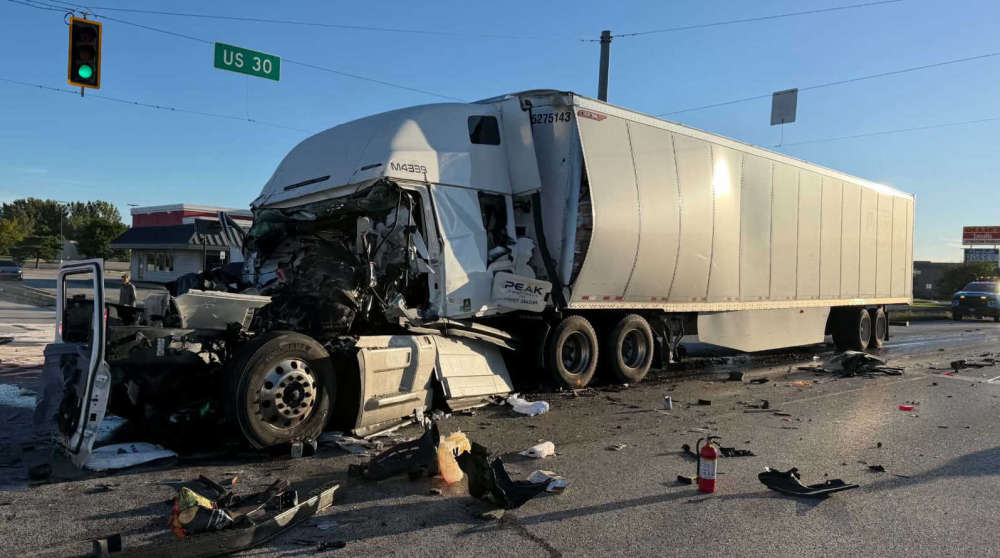 Semi driver airlifted after 3-vehicle crash on U.S. 30 at Oak Drive
 Relay for Life of Marshall County Celebrates 31st anniversary this Saturday in Plymouth’s River Park Square
 Improve your electrical skills: Industrial electrical training series coming to Plymouth
 Young discusses national security threats at FDD
 Gov. Braun leads Indiana workforce successes