
The debate over automated license plate reader surveillance in Marshall County is heating up, as residents voiced concerns before the Marshall County Commissioners during the public comment portion of their regular meeting on Monday, July 6th.
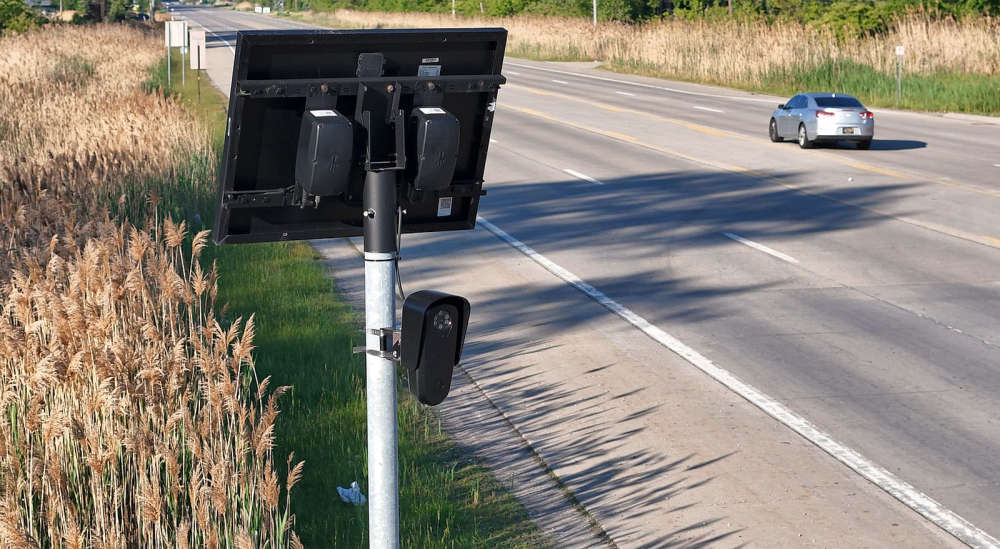
Don Nunemaker and Nelson Washburn addressed the board with objections to the county's use of Flock Safety cameras — AI-enabled devices mounted at intersections and roadways that scan passing vehicles, record license plate numbers, and log vehicle characteristics, including make, model, and color, into a shared law enforcement database. The cameras store data on all passing vehicles continuously, regardless of whether a driver has committed any violation.
Concerns raised by residents included potential violations of Fourth Amendment protections against unreasonable search and seizure, questions about how audits on camera usage are conducted, and how much control Marshall County actually has over the data being collected.
Commissioner Vice President Jesse Bohannon emerged as the most outspoken critic on the board, expressing serious reservations about the county's continued use of the cameras.
"This is something I think is becoming a bigger issue in the public as people are becoming aware of it and as AI is becoming a bigger concern for folks," Bohannon said. "I don't think this is an issue that's going to go away."
Bohannon acknowledged the challenge of overlapping jurisdictions, noting that Marshall County currently has a contract for five or six Flock cameras, while cities and towns within the county operate their own systems independently. Even if the county moved to remove its cameras, it has no authority over those operated by local municipalities.
He pointed out that in the past year alone, more than 30 local units of government across the country have chosen to remove their Flock contracts or abandon the systems entirely, with many more opting not to enter contracts in the first place.
Most strikingly, Bohannon raised concerns about the county's lack of control over the technology itself.
"From my research, we have no ability to control these systems once they've gone into place," he said. "The vendor has absolute control over the data, over the software that's on there, over the capabilities of the cameras. There's a lot of associated consequences with these that we probably didn't investigate at the beginning — not just about whether or not it's a Fourth Amendment violation, but as we continue to have more surveillance going on in our society, that does have long-term psychological effects on people as they realize they're being watched."
Commissioner President Stan Klotz took a more measured approach, expressing confidence in the cameras' effectiveness for law enforcement while acknowledging the public's privacy concerns. Klotz said he has spoken with unopposed Prosecutor candidate Joe Morris, who has assured him he is actively researching the issue and will present his findings to the board.
"I trust Joe," Klotz said. "I think he will try to balance public concerns and the privacy issues along with public safety." Klotz added that he wants to hear Morris's approach before making a final determination on the county's use of Flock cameras.
The discussion made clear that the question of automated license plate readers in Marshall County is far from settled — and that the conversation between residents, commissioners, and law enforcement is likely to continue in the months ahead.
 City Officer arrests Mishawaka man for driving without a license after traffic stop in Plymouth
 2 men arrested following road rage fight at Low Bobs in Plymouth on Tuesday
 Plymouth woman arrested on methamphetamine charge after traffic stop Thursday
 Taco Bandit Busted: Plymouth man arrested for swiping doorstep Taco Bell order
 Michigan Man Arrested Following Multi-County Pursuit in Stolen Vehicle
 Taste the Music, Feel the Fun, Shop the Culture: Why You Can't Miss the Latino Festival This Saturday
 Gov. Braun: East Central Indiana exemplifies Indiana's booming growth
 Hoosier the Bison Indiana University race car bobblehead unveiled