

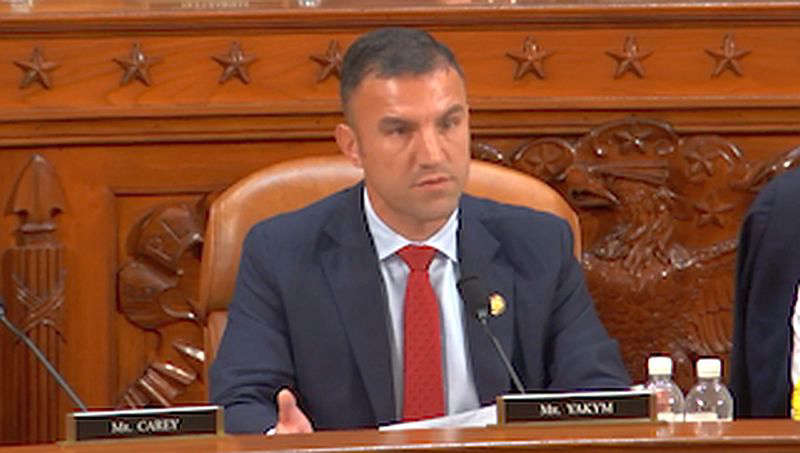
Wednesday, the House Ways and Means Committee unanimously passed the Support for Expectant and Parenting Foster Youth Act (H.R. 7655), the bipartisan legislation authored by Congressman Rudy Yakym (R-IN-02) and Ranking Member Danny K. Davis (D-IL-07) to the House Floor. The bill strengthens coordination between the Maternal, Infant, and Early Childhood Home Visiting (MIECHV) and Chafee programs to better serve foster youth who are expecting or raising children of their own.
"We have an obligation to leave this world better than we found it,” Rep. Yakym said. “That starts with the next generation, and especially the most vulnerable among them. Home visiting programs support new and expectant parents through helping them gain the skills they need to be successful parents. This issue was near and dear to Jackie Walorski, and it's an honor to carry her legacy forward. I'm grateful for Ranking Member Davis' partnership and proud to see this bill clear committee today. I look forward to getting it to the House Floor for the foster youth who need it most."
“Illinois and Indiana are national leaders in helping expectant and parenting foster youth address the unique challenges they face as they transition to adulthood,” Rep. Davis said. “I proudly join with Rep. Yakym to ensure that these young parents have access to intensive case management, high-quality home visiting, and resource coordination so they and their children can thrive. Passing this bill out of Committee unanimously reflects its importance, and I look forward to its passage on the House Floor very soon.”
“Home visiting services can have a life-changing impact on both parents and their children,” Ways and Means Committee Chairman Jason Smith (MO-08) said. “Representative Yakym’s creative and thoughtful bill ensures that the MIECHV program – reauthorized on a bipartisan basis in 2022 under the leadership of his predecessor, the late Jackie Walorski – is utilized to its full potential for foster youth. By building on Jackie’s legacy, Congressman Yakym is ensuring these critical, evidence-based resources are connected to the foster care system where they can make a profound impact. His leadership on this legislation demonstrates a deep commitment to results-oriented solutions that strengthen families.”
Watch Rep. Yakym and Rep. Davis discuss their bill HERE.
The bill has also garnered support from over 160 stakeholders across the country. See the full list HERE.
Bill Summary
Requires states to have a process to provide expectant or parenting foster youth with information about visiting services under the MIECHV Program as a condition of receiving Chafee funds.
Permits a state to use its Chafee funds to provide tailored case management services and resource coordination for expectant or parenting foster youth.
Full bill text is available HERE.
Background:
The John H. Chafee Foster Care Program for Successful Transition to Adulthood (Chafee program) provides states, territories, and tribes with funds to support youth that are transitioning out of the foster care system. Funds can be used to support housing, education, employment, and other vital services.
The Maternal, Infant, and Early Childhood Home Visiting (MIECHV) Program provides funding for evidenced-based home visiting programs that support at-risk families to achieve better health outcomes and economic self-sufficiency.
Rep. Yakym’s predecessor Jackie Walorski was a strong supporter of the MIECHV program and the 2022 MIECHV reauthorization was named in her honor.
70% of females in foster care become pregnant by age 21, compared to 34% of their peers not in foster care. Streamlining coordination between MIECHV and Chafee programs will better support these youth and help them access all the resources available to them.
The Ways and Means Committee passed six bills out of committee all focused on the reform of the John H. Chafee Foster Care Program for Successful Transition to Adulthood.
H.R. 7432, the “Foster Youth Housing Opportunity Act”
- Improves access to housing for youth aging out of foster care, and former foster youth, by strengthening coordination between Chafee and the Foster Youth to Independence (FYI) housing voucher program. Aligns age eligibility between both programs, updates the existing 30 percent cap on room or board to exclude housing supportive services, and requires joint federal guidance to clarify rules and coordination of child welfare and housing services at the local level.
H.R. 7463, the “Foster Youth Postsecondary Education Access and Success Act”
- Increases the individual cap on Chafee Education and Training Vouchers (ETV) vouchers from $5,000 to $12,000 per student annually, while maintaining current funding levels for ETVs and permits states to establish a grace period for youth to demonstrate satisfactory progress toward completion of a program, after an assessment and consultation with the youth.
H.R. 7343, the “Foster Youth Workforce Opportunity Act”
- Expands flexibility in the Chafee EVT program to allow youth to access short-term workforce and vocational training and credentialing programs. Further expands ETVs for the costs of apprenticeships, GED, and remedial education, and provides one additional year of eligibility if used for remedial education.
H.R. 7529, the “Fresh Starts for Foster Youth Act”
- Improves access to legal services for youth and ensures states have processes in place to take into consideration legal issues impacting foster youth, such as housing, education, employment entry, and family conditions, as part of case planning in their transition to adulthood.
H.R. 7655, the “Support for Expectant and Parenting Foster Youth Act”
- Improves access to home visiting services offered through the MIECHV program for youth in foster care who are expecting or parenting. Permits states to use Chafee funds to provide specialized case management to expectant and parenting foster youth.
H.R. 7995, the “Chafee Opportunities for New Networks and Existing Connection Trust (CONNECT) Act”
- Updates Chafee purposes to reflect the importance of foster youth establishing meaningful connections with adults and other lifelong support networks. Adds a new purpose to clarify that Chafee funds may be used to help foster youth engage in their own permanency process and planning for independence.
 Plymouth woman arrested for driving without a license following traffic stop
 IDHS warns against disaster assistance fraud
 USDA announces $1.8 billion in 2026 Conservation Program payments
 Triton Jr. Sr. High School girls basketball head coach resigns
 Fire damages exterior of Symphony's Restaurant in Plymouth
 PCSC passes 2027 budget
 Councilman Longanecker addresses property maintenance and parking concerns in his district
 Gov. Braun makes it easier for Hoosier Veterans to access career opportunities in the trucking industry