


Today, Congressman Rudy Yakym (IN-02) voted in favor of the Standardizing Permitting and Expediting Economic Development Act, or SPEED Act (H.R. 4776), which will amend the National Environmental Policy Act (NEPA) of 1969 to clarify the ambiguous provisions and facilitate a more efficient, effective, and timely environmental review process.
“For years, NEPA has imposed unnecessary red tape that delays critical infrastructure projects, slows economic growth, and limits domestic energy production,” Rep. Yakym said. “The SPEED Act streamlines the permitting process to promote innovation, spur economic development, and unleash America’s energy independence.”
In addition, the SPEED Act supports faster construction of energy and infrastructure projects that align with policies included in the Working Families Tax Cuts, helping to lower costs and strengthen American energy production.
The vote builds on Rep. Yakym’s continued efforts to reform the federal permitting system. Last week, the House passed his bipartisan bill (H.R. 573), the Studying NEPA’s Impact on Projects Act, which would improve transparency and allow the federal government to better assess the efficiency and effectiveness of the permitting process.
Earlier this week, the House also passed the Reliable Power Act (H. R. 3616), which protects the nation’s electric grid by requiring federal agencies to consider grid reliability before finalizing new regulations. This legislation provides greater certainty, stability, and predictability for hardworking American families and businesses.
 Gov. Braun leads largest coordinated debris operations in recent state history
 Affordable Hearing representatives help bring Indiana support to veterans hearing care bill
 Attorney General Todd Rokita calls on Hoosiers to claim compensation for inflated generic drug prices
 Governor Braun proclaims Indiana Rail Safety Week September 21-27
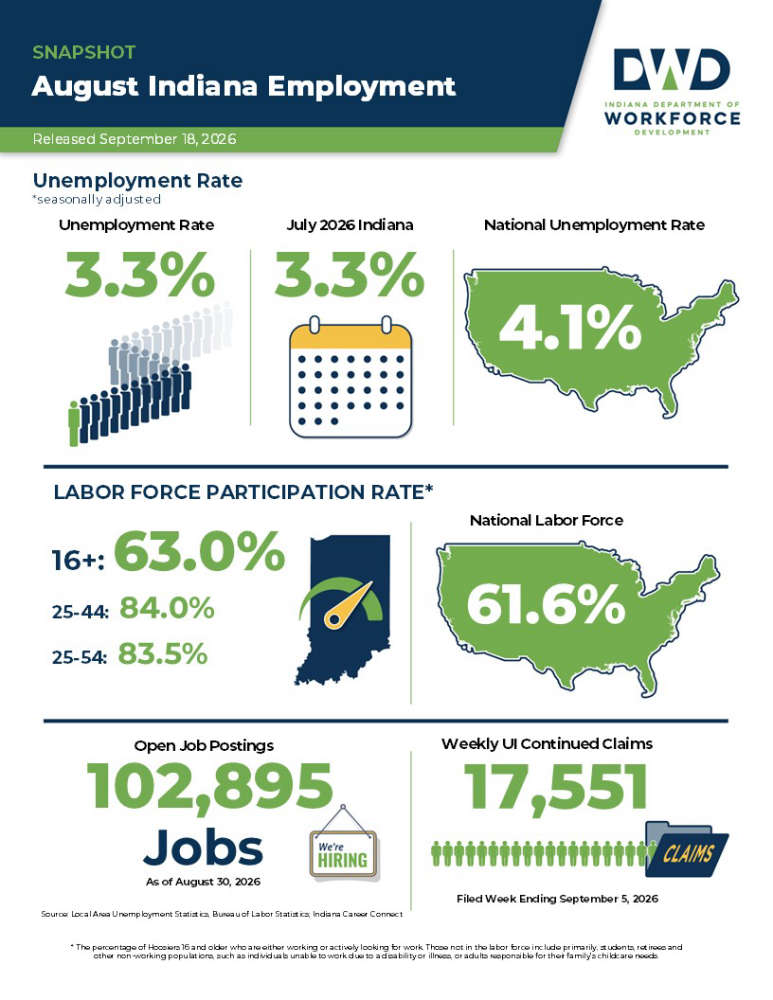 State unemployment rate remains below national average
 Indiana weekly gas price update
 USDA announces 2026 and 2027 enrollment for key price and revenue safety net programs, first base acre increase in two decades