
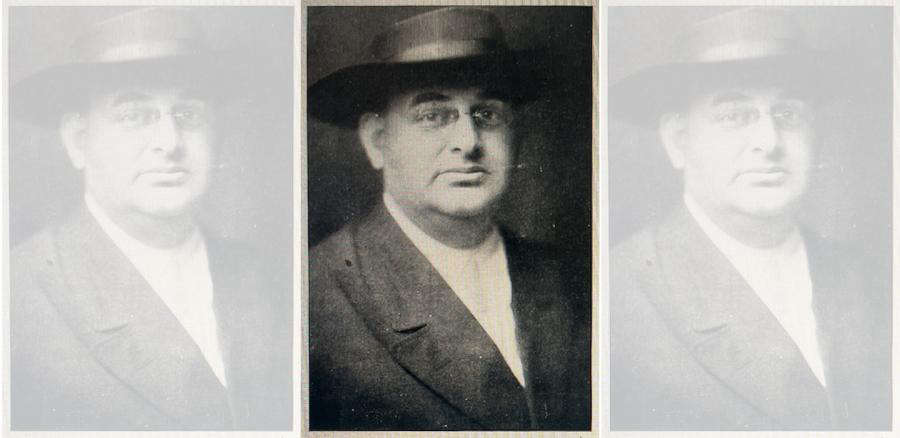
How a Vincennes businessman, philanthropist, originated the first Mental Attitude Award.
The presentation of a mental attitude award following a state championship event is a long-running, cherished tradition in Indiana high school sports.
For decades, the first honor given during a post-game awards ceremony is announced by a member of the IHSAA Executive Committee, now via wireless microphone.
A senior student-athlete participating in the state finals, nominated by his or her principal and coach, is selected by the IHSAA Executive Committee for demonstrating excellence in mental attitude, scholarship, leadership, and athletic ability during their high school career. After the name is read, his or her parents are invited to join them in the presentation, oftentimes in front of thousands of spectators. That student is then presented a plaque made of walnut in the shape of the state of Indiana and - depending on the sport - a $1,000 scholarship from one of the IHSAA’s presenting sponsors - Indiana Farm Bureau Insurance, the Indianapolis Colts, Indiana Pacers, or Indiana Fever.
Many long-time Indiana high school basketball fans are familiar with the Trester Award, named for Arthur L. Trester, the first commissioner of the IHSAA who served from 1922 until his passing in 1943. He designed Indiana’s famous boys basketball tournament which rose to national prominence under his leadership. His name was attached to the award beginning in 1945 as the United States and its allies were about to win WWII.
But the award dates back even further. The year 1916 to be exact.
That’s when Jacob (Jake) Gimbel, a Vincennes businessman and philanthropist approached the IHSAA Board of Control with his idea.
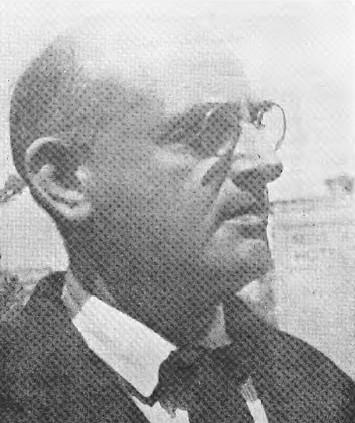
Born in 1876, Gimbel was the nephew of Adam Gimbel, a Bavarian immigrant, who settled in Vincennes in 1842 and established a trading post that over decades grew into the famous Gimbel Department Store, a family business with the help of his seven sons, his brothers and neices and nephews. Over time, the department store expanded and eventually grew into a retail empire and a rival of Macy’s with stores in New York City, Chicago, Philadelphia, and Milwaukee. Family members learned every aspect of running the business from wrapping parcels to employing help.
Gimbel’s father Seleman (Solomon) Gimbel owned several businesses at the same time, and, for his part, Jacob took over the store located at Second and Main streets in Vincennes following the death of his mother, Mary.
Early in adulthood, Gimbel became interested in philanthropies. Hundreds of boys from poor families in Vincennes were encouraged to save their pennies and nickels and open savings accounts with the local bank. Gimbel promised and delivered that for every first dollar they saved, he would match with another dollar.
He also became well known for assisting many young men in financing their college educations, some of whom went on to become prominent citizens.
The late Curtis G. Shake was one such citizen. After earning his degree from Vincennes University, Shake decided to attend Indiana University to study law. Gimbel paid for his schooling asking for nothing in return other than for Shake to help another student in a similar manner in the future if he had the means. Shake graduated in 1910.
Shake would “pay it forward” by serving 52 years as a Vincennes University trustee, held the position of Chief Justice of the Indiana Supreme Court three times, and also was a presiding civilian judge during the Nuremberg Trials for war crimes following WWII. The Shake Library on the Vincennes campus is named in his honor.
It has been written that Gimbel “conceived the idea of a mental attitude award in the days when Vincennes annually was producing state championship contenders and was riding a crest of hardwood power.”
“ln 1916, Gimbel presented to the IHSAA Board of Control a proposal to give a cash prize and medal each year at the State Basketball tourney to the boy among the teams represented that showed the best mental attitude throughout the tourney. Mr. Gimbel did not have in mind the quality of the playing of any boy on any team but did have in mind the qualities that belong to a real gentleman. He clearly recognized the mental and moral strain under which the players play during the tourney, and he also recognized the numerous opportunities for the players to lose control of themselves and to do something not conducive to true sportsmanship.”
The IHSAA Board of Control meeting on November 17, 1916, included this item in its minutes:
“A proposition presented by Mr. Jake Gimbel of Vincennes, to give a cash prize and a medal to the member of one of the teams at the Final Basketball Tourney who showed the best mental attitude during the tourney, was accepted.”
Another IHSAA Board of Control meeting from later years included this item in its minutes:
“The following points were mentioned by the donor of the Gimbel Prize for Mental Attitude when it was first given:
The winner may be the weakest player on the weakest team in the tourney.
Poise and calmness in play under any and all conditions.
Ready acceptance of decisions of officials.
Attitude toward members of team, opponents, and officials.
Attitude and conduct as known or observed on floor, in dressing room, on street, in hotels, etc.
Briefly, the qualities that go to make a real gentleman are the ones in the mind of the donor.”
The first Gimbel Prize was awarded to Claude Curtis of Martinsville High School (photo below), which had lost to eventual state champion Lebanon in the semifinals.
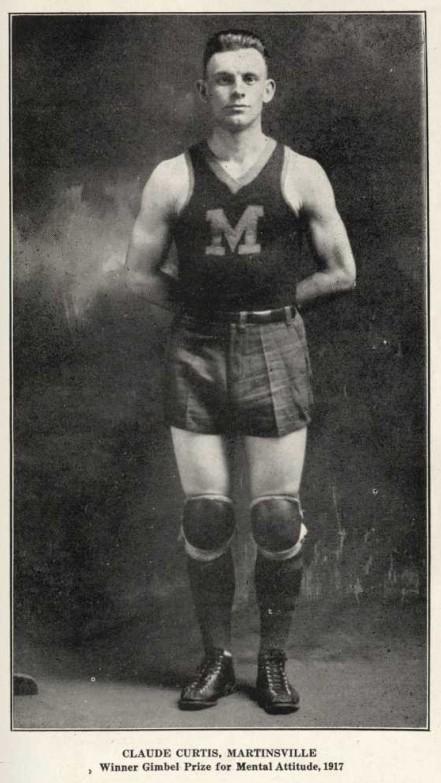
The Gimbel Prize became the highest individual honor the IHSAA presented every year, and each recipient earned a place of honor in Indiana basketball history. Gimbel either presented the award in person or corresponded with the honoree by hand-written letter every year through 1942, before passing away of a heart attack, just weeks before the 1943 state tournament. Gimbel had lived out his later years in Santa Monica, CA until his death on January 28, 1943, at the age of 66.
Beginning in 1945, and following the death of Arthur Trester, the IHSAA Board opted to rename the award in his honor. The Board directed new Commissioner L.V. Phillips to inform Los Angeles attorneys for the Jake Gimbel estate that the IHSAA was waiving all claims to a sum which was provided in the estate for the Gimbel Prize.
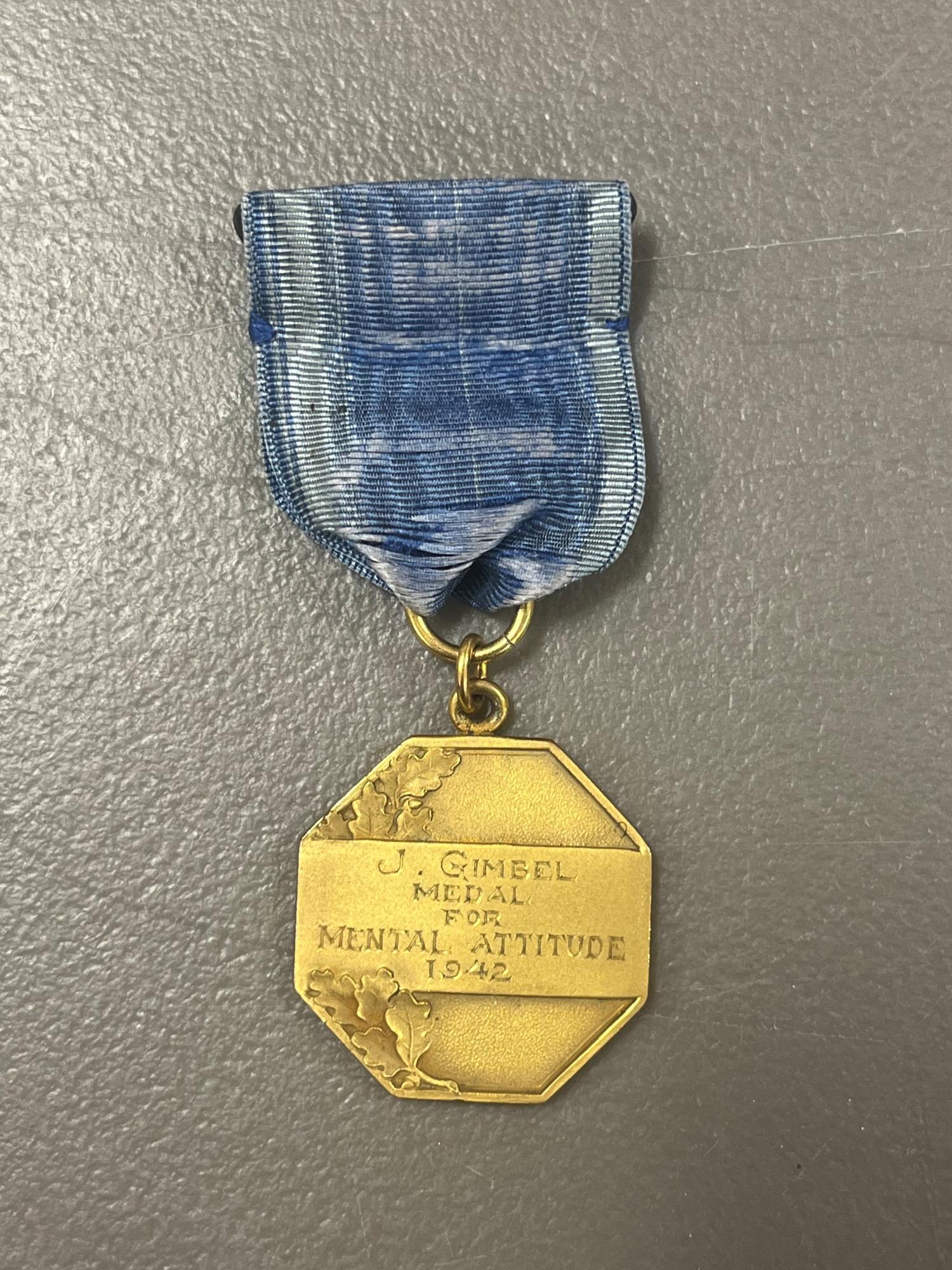
Out of Gimbel’s first presentation in 1917, many schools began presenting their own similar awards to recognize the best and brightest student-athletes in their communities.
During the 1960s, mental attitude awards were presented for the first time in sports other than boys basketball. In 1962, a boys track and field recipient was announced. In 1964, it was boys wrestling, and in 1968, baseball was added. And in the 1970s, even more young people were honored with the advent of girls sports.
Today, the Mental Attitude Awards, several of which carry the names of former commissioners, assistant commissioners, and others who devoted many years to high school sports, is awarded to 50 Hoosier student-athletes in all 24 sports every school year.
He never married and had no children but Jacob Gimbel’s idea, along with his generosity and benevolence began a legacy that endures to this day and has become a unique tradition in Indiana high school athletics.
 Rochester product Garrett Winegar leaving Fishers to coach at Iowa prep program
 Special Olympics Indiana hosting 54th annual state basketball tournament
 Gilliard voted IndyStar Indiana Miss Basketball for 2026
 IHSAA boys basketball regional sites announced