

Those crisp fall days won't last forever, and neither will your lawn and garden equipment — at least not if it's stored improperly for the winter. As the season shifts, Purdue Extension is urging homeowners to pay attention to the fuel they use in small engines, and the advice could save a lot of frustration come spring.
With the growing season winding down, now is the time to prepare lawn mowers, string trimmers, leaf blowers, and other small-engine equipment for winter storage. But according to Purdue Extension, the type of fuel used in these engines plays a critical role in how well they survive the off-season.
Many people use regular automobile fuel for their small engines, but that may not be the best practice. Auto fuel is typically blended with 10 to 15 percent ethanol, an additive used for emission reduction on the highway. While this poses no issues in automobiles — where the tank is continually depleted and refilled — it can cause problems in small engines that sit idle for long periods.
Fuel with an alcohol additive causes greater corrosion and attracts water vapor from the air, which can be particularly damaging in small engines used only seasonally, such as lawnmowers, snowblowers, log splitters, and pumps.
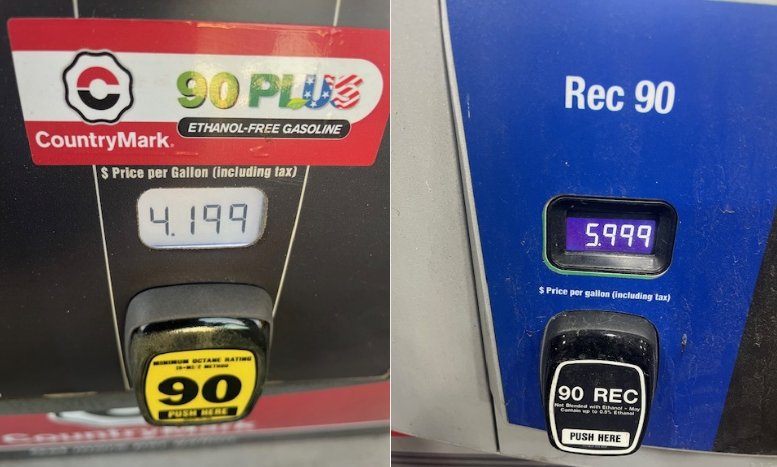
Alcohol-free fuel, commonly known as "REC" gas — short for recreational — is fuel that contains no ethanol blending. It typically costs a dollar or more per gallon than regular auto fuel, but it is recommended by nearly every small engine repair shop for improved engine performance.
REC gas is not the same as premium unleaded, as most unleaded plus and super unleaded fuels still contain ethanol. Consumers can identify REC gas by looking for the words "alcohol free" or "REC Gas" on the pump, or by decals showing boats, ATVs, or other recreational vehicles.
For two-cycle engines that require a gas-and-oil mixture, REC gas is mixed with two-cycle engine oil at the same ratio as regular unleaded fuel.
If engines are left with ethanol-blended fuel over the winter, starting them in the spring can be an unpleasant experience. REC gas, by contrast, is not detrimental to engines when they sit idle for extended periods.
Purdue Extension also recommends firing up engines on warmer days during the winter, especially those with electric starters and batteries. This keeps batteries charged and may deter varmints from taking shelter in stored equipment.
The same principles apply in late winter and spring for year-round equipment like backpack blowers and winter-only equipment like snowblowers that sit idle during the off-season.
For more information, contact Mark Evans at the Purdue Extension Elkhart County office by email at mevans@purdue.edu or by phone at 574-533-0554.
 Wabash man sentenced to 80 months in prison for possession of child sexual abuse material
 INDOT reminds drivers stay alert for road crews, Project Greenlight to increase worker visibility
 Indiana State Police want everyone to stay safe this Halloween
 NIPSCO to deliver $57.5 million in savings to electric customers from data center development
 Indiana health officials announce 1st flu death of season
 Cass County celebrates READI-funded France Park enhancements
 Splash Pad coming to Pike Memorial Park in Akron
 United Way Northwest Indiana names Barry Tyler Jr. Chief Community Impact Officer