

A bill advancing through the Indiana legislature could dramatically change how students use cellphones and smartwatches in schools across the state, including in Plymouth.
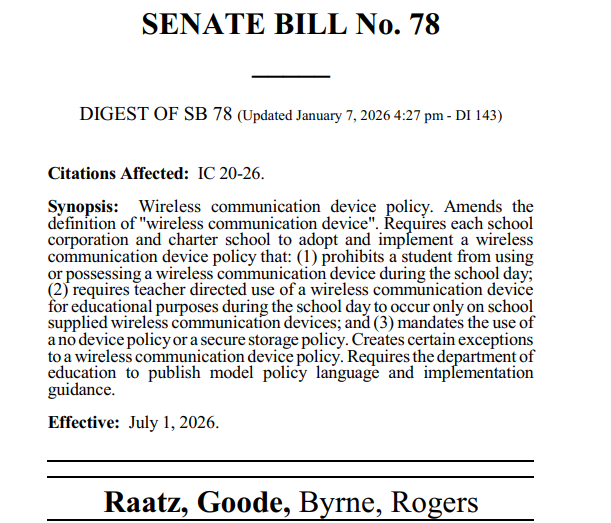
Indiana Senate Bill 78, which was progressing through the state legislature as of mid-February, would require all K-12 public and charter schools to implement a strict "bell-to-bell" ban on wireless communication devices, extending beyond classroom time to include lunch periods and hallway passing periods.
Plymouth Community School Corporation Superintendent Mitch Mawhorter provided an update on the legislation earlier this month, outlining the significant changes schools would face if the bill became law.
"If Senate Bill 78 becomes law, it will require all public schools and charter schools to adopt a strict wireless communication device policy with core elements," Mawhorter explained.
The bill would prohibit students from using or even possessing cellphones or similar devices during the entire school day, not just during class instruction time.
Schools would be required to choose between two implementation models: the No-Device Policy, where students cannot have their phones at school at all during the school day, or the Secure Storage Policy, where students can bring devices to school, but they must be stored in a way that makes them inaccessible until dismissal.
Both options represent a significant departure from current practices at many Indiana schools, where students are often allowed to use devices during non-instructional time or keep them in their bags or lockers.
The bill would also limit teacher-directed use of technology devices for instruction to school-supplied equipment only, effectively ending the "bring your own device" (BYOD) model that many schools have adopted in recent years for classroom work.
Under this provision, students would no longer be permitted to use their personal devices for educational activities during class, even under teacher supervision.
Senate Bill 78 expands the definition of wireless communication devices to include smartwatches that are connected to a network, recognizing the growing prevalence of wearable technology among students. The legislation does include exceptions for specific circumstances: medical needs, emergencies, and certain educational accommodations, as outlined in the bill.
As the bill continues through the legislative process, school districts across Indiana are monitoring its progress and preparing for potential implementation if it becomes law.
The legislation reflects growing national concerns about cellphone distraction in schools and its impact on student learning, mental health, and social interaction. Several states have moved toward stricter cellphone policies in recent years, with Indiana now considering joining that trend.
 Knox to host one of the statewide water stakeholder input workshops
 Historic houses of worship invited to apply for grants
 Indiana state leaders to highlight significance of national debt resolutions
 Fulton woman arrested for threatening man with baseball bat and vandalizing car
 Update: Fatal accident on U.S. 31 Wednesday
 Groundbreaking for $10B Meta data center campus at LEAP District